The selection of Kalimantan as host is not without reason. An island whose geological formation stretches back to the Mesozoic era, and whose human presence dates to at least sixty-five thousand years ago, Kalimantan unfolds alongside what is often described as the world’s oldest tropical rainforest—a dense and enduring canopy sheltering a biodiversity so vast as to resist valuation. Much of it exists nowhere else on Earth: the Bornean orangutan, the Pesut Mahakam, and countless other endemic species now face precarity as forest cover fragments under decades of plantation expansion, industrial concessions, and insufficient oversight. The urgency is further sharpened by the presence of Nusantara, Indonesia’s new capital—making Kalimantan not merely an ecological stronghold, but a living window through which the world will observe how Indonesia reconciles development with the stewardship of its most irreplaceable natural inheritance.
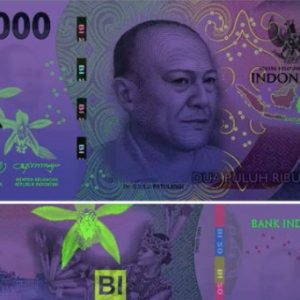
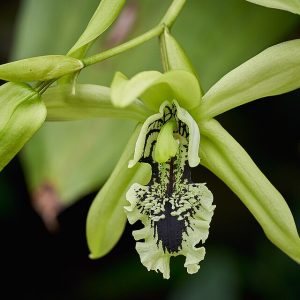
Biodiversity Fact: The Black Orchid (Coelogyne pandurata), an endemic species of Kalimantan, appears on the 20,000-rupiah banknote—and, when exposed to ultraviolet light, its image emits a subtle glow, revealing a hidden layer of detail embedded in the currency.
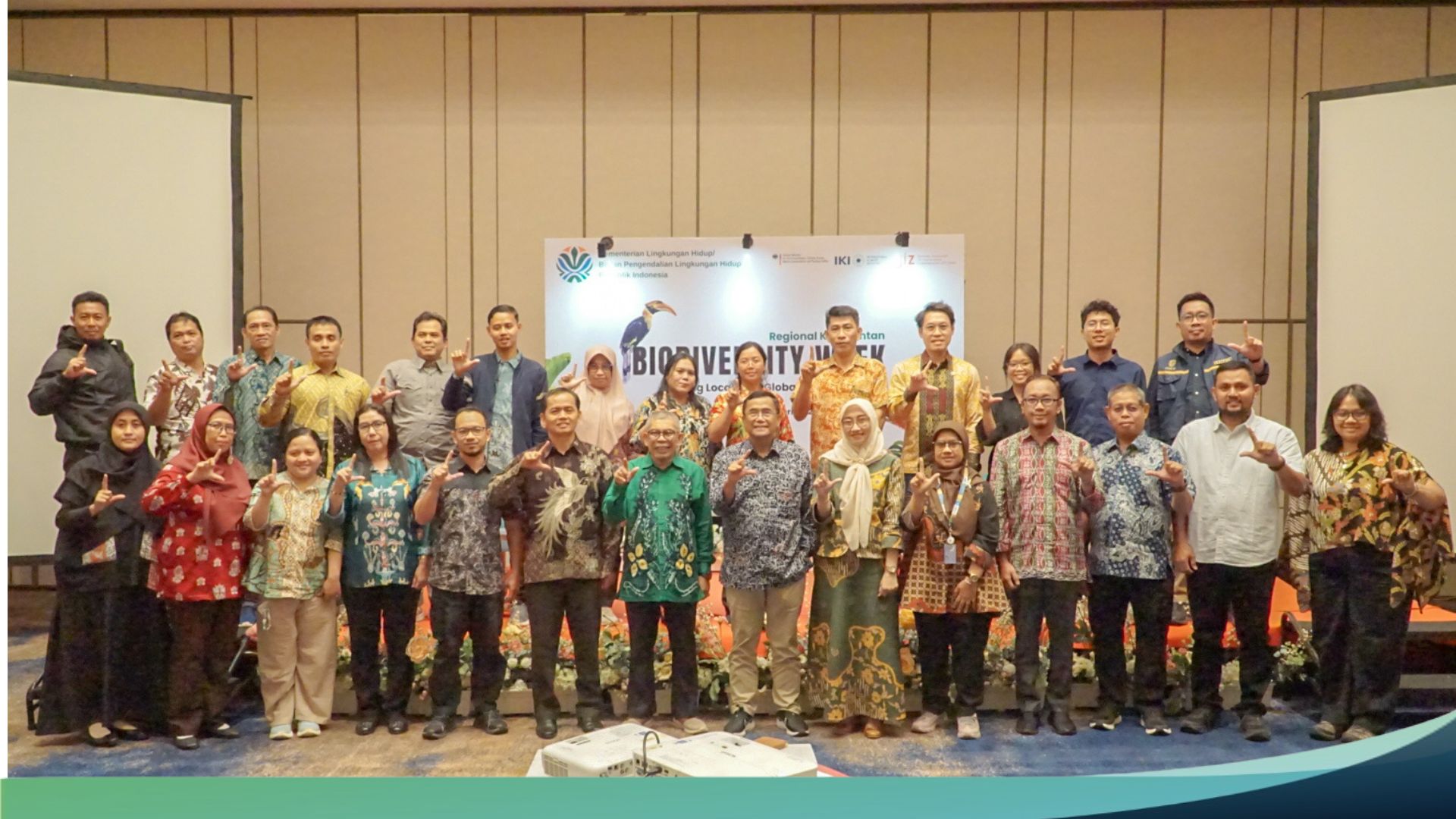
Indeed, starting from this facts, The Ministry of Environment/Environmental Protection Agency of the Republic of Indonesia, together with the International Climate Initiative (IKI-Hub Indonesia), supported by GIZ Indonesia and ASEAN has come to see Kalimantan as an ecoregion requiring coaching clinic and workshop, directed toward 5 provincial and 56 district governments, local communities, 5 NGO, and 7 academic institutions, in order to ensure that biodiversity conservation programs take shape not only in policy level but also in practice.
This three-days programme brought into focus an essential issue: the need to strengthen cross-sectoral synergy in the sustainable protection and management of biodiversity in Kalimantan’s eco-region, while also confronting the persistent challenge of enabling regions to mobilize adequate financing models for conservation efforts. Within this framework, the speakers presented detailed data on conservation areas and wildlife corridors across the region, which is an element that forms a critical foundation for evidence-based planning and policymaking.
The substance of those first two days circled, repeatedly, around a pair of linked problems: coordination and money. The East Kalimantan Natural Resources Conservation Agency framed the workshops as diagnostic as much as instructional — a way of gauging not just what stakeholders know, but how committed they are, and whether that commitment has been translated into anything resembling a coherent plan. On the technical side, presenters laid out detailed data on conservation areas and wildlife corridors across the Kalimantan ecoregion, the kind of granular, geographic information that makes evidence-based policy possible rather than merely aspirational.
The financing picture was harder to look at squarely. The Director for Environment at Indonesia’s Ministry of National Development Planning pointed to a persistent imbalance: across Kalimantan’s ecoregion, 5 provincial governments collectively allocate close to fifty million euros to biodiversity conservation—an amount that appears significant in aggregate, yet diminishes in proportion, with conservation spending in each province rarely exceeding seven per cent of total regional budgets. What emerges is not simply a constraint of resources, but a structural positioning of biodiversity at the margins of development planning. Furthermore, the director urged and assisted regional governments to move beyond conventional fiscal reliance and to begin constructing alternative financing architectures (penta helix collaboration models), grounded in multisectoral cooperation and capable of sustaining conservation efforts beyond the limits of public expenditure.
These conversations were framed, throughout, by the long timeline of IBSAP 2024–2045, Indonesia’s national biodiversity strategy, which sets out to align policy, data, and institutional capacity across two decades. The ambition is considerable; the distance between ambition and practice is one of the things the workshops were quietly measuring.
The third day offered a different kind of measure, shifting from technical exchange to an open-space learning session that combined environmental education, field-based experience, and creative forms of advocacy, placing youth participation alongside the situated knowledge of local communities. The premise was straightforward: young people are not merely future custodians of environmental governance, but are already active in shaping it, and the depth of their engagement will influence whether they hold a substantive role in the decisions that determine its direction.
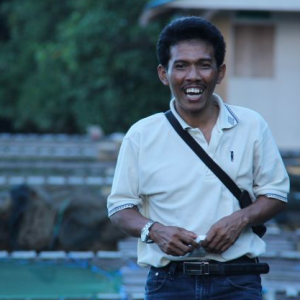
Meet Agus Bei, a recipient of the Kalpataru Award in the Environmental Guardian category, recognised for his role in establishing the Mangrove Center in Balikpapan. Over the years, his work has become closely identified with the restoration of mangrove ecosystems in East Kalimantan, where he has rehabilitated extensive coastal areas and contributed to strengthening local conservation practices. His efforts have earned multiple accolades, positioning him as a central figure in the region’s environmental movement and a source of inspiration for younger generations. During the Kalimantan biodiversity week programme, participants were given the opportunity to visit the site where he continues to cultivate and protect mangrove ecosystems, offering a direct encounter with the long-term, hands-on nature of conservation work.
Over the course of the session, field officers guided participants through the landscape, introducing them to Kalimantan’s native flora and fauna and tracing how each leaf and root system contributes to sustaining ecological balance. In concrete terms, participants were shown the scale of Kalimantan’s biodiversity—some 2,693 species of flora, 6,200 species of fauna, and 336 forms of microorganisms—which together constitute the region’s ecological fabric, quietly underpinning everyday life. What emerged, if only implicitly, was an understanding that the continuity of this living system will depend, in no small measure, on the choices this generation makes in the years ahead.
The series continues. Makassar is next, representing the Sulawesi–Maluku ecoregions, before the programme concludes in Jakarta in advance of Indonesia’s International Biodiversity Day
Photo sources: ©