April 2026
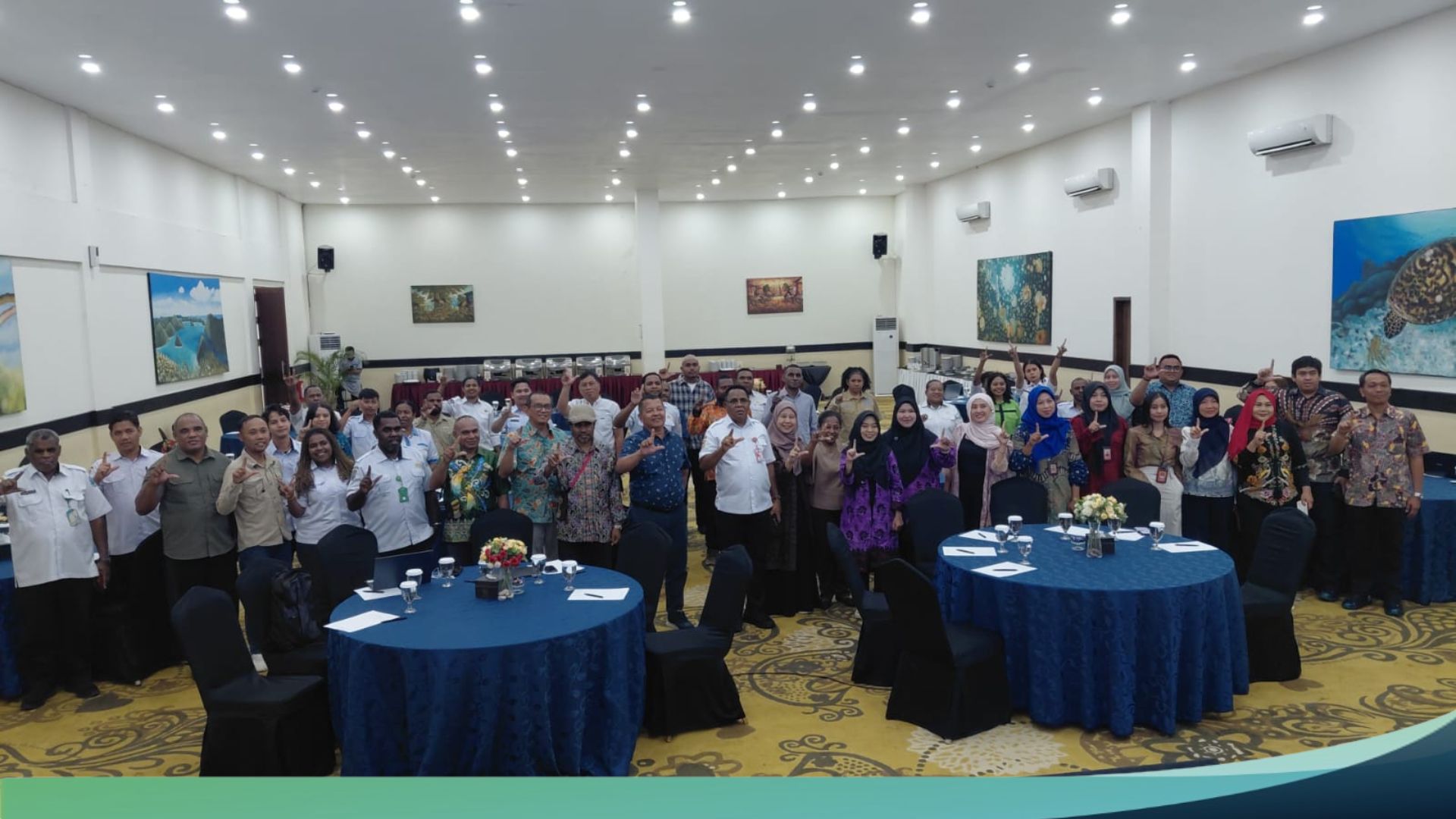
© IKI-Hub Indonesia Communications Team
The Ministry of Environment/Environmental Protection Agency of the Republic of Indonesia, together with the International Climate Initiative (IKI-Hub Indonesia), supported by GIZ Indonesia and ASEAN convened a workshop and coaching clinic on biodiversity conservation as part of the International Indonesia Biodiversity Week 2026 series in the Papua region.
Framed by the theme “Building Papua, Sustaining the Earth, Preserving Biodiversity”, the workshop convened a broad cross-section of stakeholders: 6 representatives from provincial governments, 42 from regency and municipal administrations, 9 from universities, as well as participants from NGOs, student bodies, and youth communities.
This Training was designed not merely as instruction, but as a means of strengthening institutional capacity at the regional level. It sought to deepen both understanding and technical competence in biodiversity governance, ranging from the preparation of planning documents to the development and reinforcement of structured, data-driven conservation instruments, and the monitoring of conservation efforts. Just as crucially, it aimed to foster sustained coordination between local governments, the central government, and conservation partners, enabling the cultivation of practical skills and a more grounded grasp of conservation processes, including the implementation of IBSAP 2024–2045 as a long-term roadmap for biodiversity stewardship.
During the training, deputies and directors from the Ministry of National Development Planning of Indonesia (Bappenas), the Ministry of Environment of the Republic of Indonesia, the Ministry of Forestry, the Ministry of Home Affairs, and the National Research and Innovation Agency (BRIN) delivered sessions outlining the pivotal role of regional governments in advancing and operationalizing national biodiversity priorities. Based on their input, local governments are thus positioned as key actors in every biodiversity conservation planning process, whose crucial role is to mediate the practical tensions between development imperatives and ecological limits.
Turning to the question of financing, Director of Environment at the Ministry of National Development Planning of Indonesia, pointed to a persistent imbalance. Across the six provinces that make up Papua’s ecoregion, provincial budget allocations for biodiversity conservation amount to only around 148 thousand EUR (Total allocation for conservation in the provincial budgets of six provinces in Papua), a figure that underscores the structural limits of existing funding.
Yet, the director states that regional governments must move beyond reliance on conventional budgetary sources and instead cultivate innovative financing schemes through multisectoral cooperation.
The training also engaged a set of more technical concerns: the preparation of region biodiversity profiles, the drafting of the Regional Biodiversity Management Master Plan (RIP Kehati Daerah), the designation and stewardship of areas deemed critical for conservation, and the development and long-term management of biodiversity parks.
Both the Director of Biodiversity Conservation at the Ministry of Environment of the Republic of Indonesia and a representative of the Secretariat for Scientific Authority on Biodiversity at the National Research and Innovation Agency (BRIN) emphasized that when local governments support, accelerate, and generate biodiversity profiles, the RIP KehatiDaerah, and biodiversity parks in their respective regions, it is not merely about how successfully local governments conduct biodiversity data collection; rather, it also increases the volumes of local governments’ bargaining power. In other words, the utilization of biodiversity through a multi-layered and multi-approach strategy.
In addition, technical discussions on the “procedures” for drafting key documents—ranging from regional biodiversity master plans and profiles to the designation and stewardship of areas of high conservation value, as well as models for the development and management of biodiversity parks—emerged as essential, particularly in addressing persistent gaps in technical capacity, data availability, and methodological understanding in regions marked by high levels of biodiversity.
All the speakers converged on a single shared agreement:
“If and only if regional governments can undertake systematic biodiversity document planning and apply precise scientific analysis can biodiversity cease to be treated as a peripheral concern and assume its place at the centre of regional development planning.”
However, the Indonesia-German cooperation behind workshops of this kind is, at its core, intended to strengthen knowledge transfer, align central and regional policy frameworks, and provide technical guidance for local governments in developing comprehensive biodiversity planning and management instruments, ultimately enabling conservation planning that is more effective, tangible, and coherent.
Furthermore, participants were also presented with regional biodiversity data for eco-region Papua, an effort aimed at equipping local governments and conservation partners with a more grounded, shared basis for decision-making, in order to sharpen their capacity to translate biodiversity data into actionable policy and commitment. The program concluded with a session addressing the most pressing challenges in biodiversity conservation across the Papua region, on one hand underscoring persistent gaps in institutional coordination and resource capacity, and on the other illuminating the mounting pressures of competing development priorities.
Throughout, participants engaged with notable attentiveness, their responses lending the workshop an interactive quality that suggested not only comprehension, but a growing investment in the questions at hand.
The workshop and coaching clinic on biodiversity conservation is scheduled to take place over two days, from April 15 to 16, 2025. The full event is being held in Sorong, as part of the road to the International Indonesia Biodiversity Day, which will culminate in Jakarta. Following Sorong, Balikpapan and Makassar are set to host the next leg of the series, representing the Kalimantan, and the Sulawesi–Maluku ecoregions.