Beyond the national sea frontiers lies a vast expanse of ocean that belongs to no single country yet sustains life on a planetary scale. Often referred to informally as “international waters,” these zones are more formally known as the high seas or waters beyond the 200-nautical-mile limits of Exclusive Economic Zones—areas that cover nearly half of the Earth’s surface and approximately two-thirds of the world’s Ocean. Under the doctrine of mare liberum, or “freedom of the seas,” this zone allows every nation to exercise rights related to fishing, navigation, overflight, the laying of submarine cables and pipelines, and scientific research. Yet this doctrine has also exposed some of the planet’s most remote marine ecosystems to increasing pressure from unsupervised exploration.
Indeed, it is this concern that the German government believes has reached a critical juncture. In their view, challenges in the high seas can no longer be addressed through a fragmented approach but require collective action and a shared commitment. Indonesia, home to some of the world’s richest marine ecosystems, plays a vital role in these efforts.
Together with the International Climate Initiative (IKI), supported by the Deutsche Gesellschaft für Internationale Zusammenarbeit (GIZ), the German government has committed €20 million to advancing marine conservation efforts in Indonesia, Senegal, Brazil, Chile, Ecuador, and Micronesia through 2031. The funding will be channelled through The Living High Seas project, set to launch in 2026, bringing together 8 implementing partners and 6 political partners in a coordinated effort to strengthen the protection and governance of ocean ecosystems beyond national borders, with a particular focus on Area-Based Management Tools (ABMTs), one of the 4 pillars of the implementation of the Biodiversity Beyond National Jurisdiction (BBNJ) Agreement.
Did you know? Every second breath we take is linked to the ocean. Microscopic marine organisms known as phytoplankton produce around half of the world’s oxygen, many of them thriving in open-ocean ecosystems far beyond national boundaries. Protecting the high seas therefore helps sustain life far beyond the coastlines where these waters are found.
Yuliana Cahya Wulan, Commission Manager for Living High Seas at GIZ Indonesia & ASEAN, explained that the EUR 20 million funding allocated to participating countries, including Indonesia, at some level could support the collection of scientific data from areas that have yet to be adequately surveyed. According to her, such data would serve as a critical foundation for strengthening conservation efforts and promoting the sustainable management of marine ecosystems.
In the same vein, The Living High Sea project also advances implementation of the BBNJ Agreement (Biodiversity Beyond National Jurisdiction), a new hope for protecting biodiversity in the high seas. As one of the first countries that ratified this agreement, Indonesia move the agreement beyond bilateral negotiations and into practical conservation efforts. Indonesia today is emerging as a key partner in the implementation of the BBNJ Agreement, supporting the development of Area-Based Management Tools (ABMTs), including Marine Protected Areas (MPAs), as conservation cooperation shifts from negotiations to concrete action.
For Hans-Ludwig Bruns, Country Director of GIZ Indonesia & ASEAN, Indonesia’s ratification of the BBNJ Agreement reflects the country’s growing commitment to safeguarding the global ocean. As the world’s largest archipelagic nation, he noted, Indonesia is uniquely positioned to help shape the future of sustainable ocean governance through concrete action.
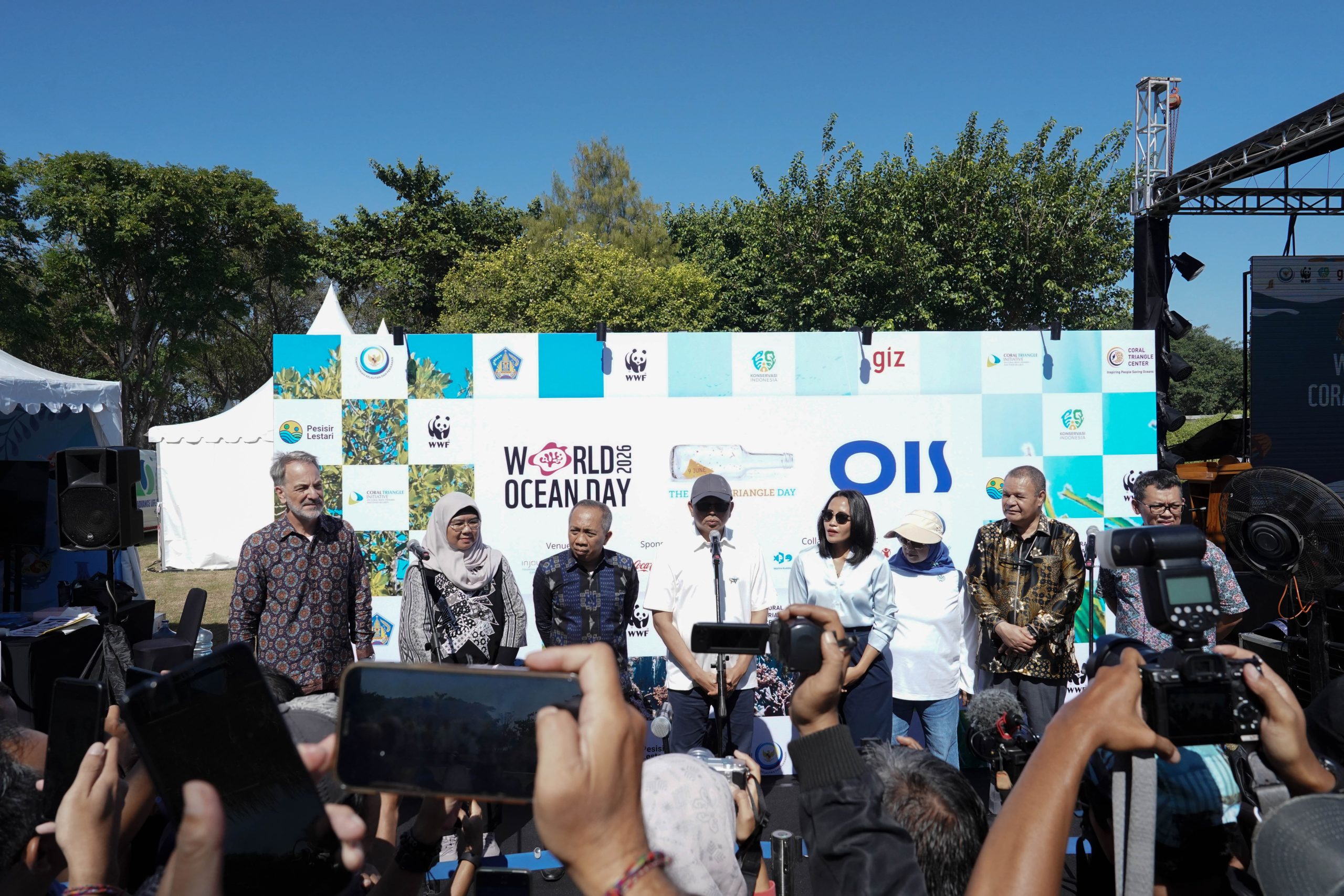
That shift in orientation was also on display at a series of events held recently to mark World Ocean Day and the Coral Triangle side event in Nusa Dua, Bali. Organized by The Ministry of Marine Affairs and Fisheries in partnership with WWF-Indonesia, GIZ Indonesia & ASEAN, the Coral Triangle Initiative on Coral Reefs, Fisheries and Food Security (CTI-CFF), Konservasi Indonesia (KI), and a number of other strategic partners, the gatherings served as a forum for dialogue on strengthening regional cooperation in ocean governance and the conservation of marine biodiversité.
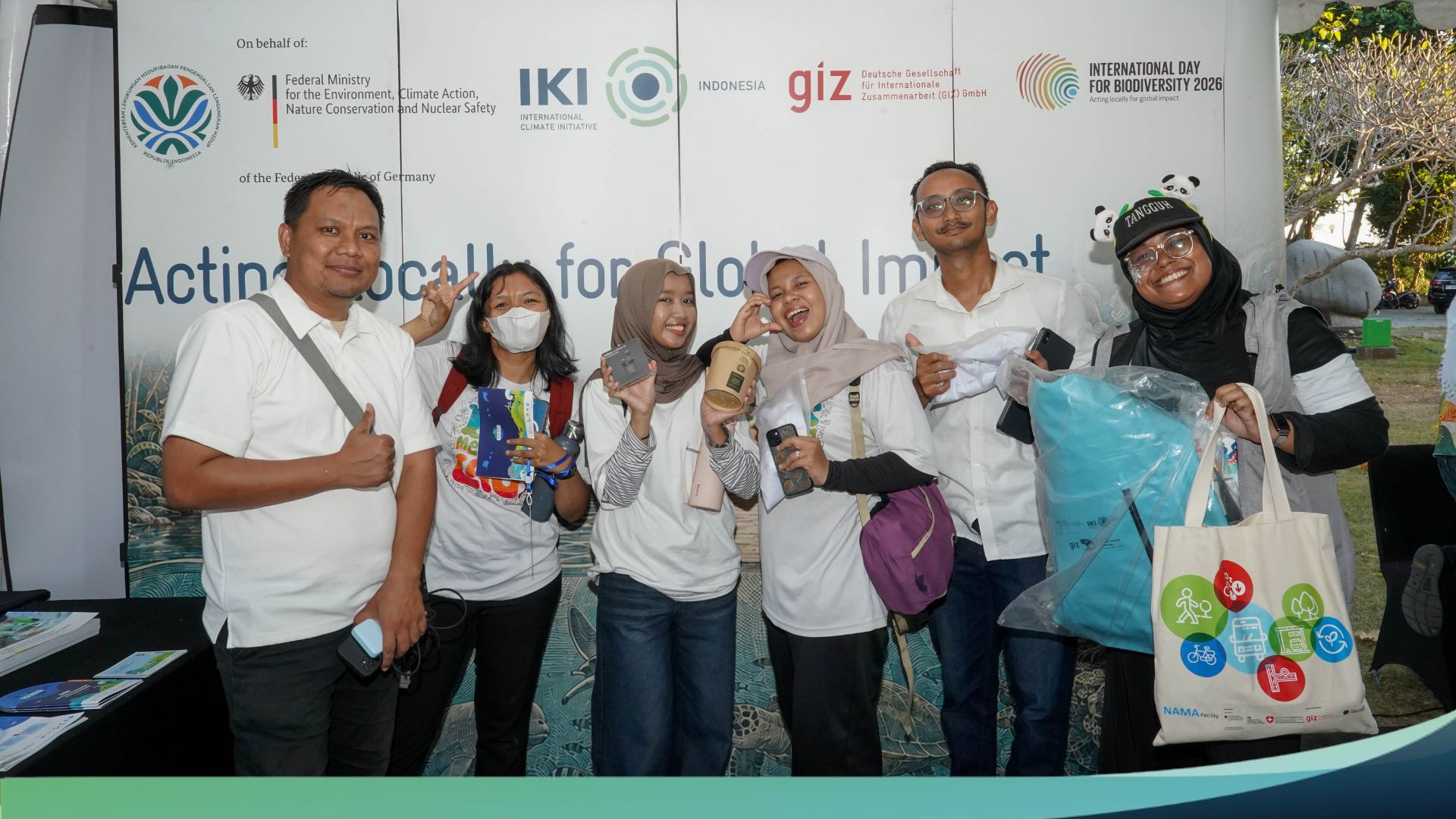
The celebration also featured a wide range of educational and interactive activities, including workshops, talk shows, exhibitions, and the 3D Marine Species Kite Festival. These activities however aimed to raise public awareness of the vital role marine ecosystems play in sustaining life, while fostering broader support for marine conservation efforts and the development of a sustainable blue economy.
For Koswara, Director General of Marine Spatial Management at Indonesia’s Ministry of Marine Affairs and Fisheries, the gathering served as a reminder that the future of Indonesia’s oceans depends on far more than government action. Lasting marine stewardship, he suggested, requires the commitment of local governments, businesses, academics, development partners, communities, and especially younger generations who will help shape the country’s maritime future.
There is a striking irony in that. For much of the past few decades, the high seas have felt conceptually and geographically so distant (inexsuperabilis) to many people—beyond the 200 nautical mile limit. Yet these seemingly farthest reaches sustain life whose consequences wash back to us with surprising proximity. Damage inflicted in waters that fall outside any single nation’s jurisdiction can, in time, ripple outward to undermine food security, the viability of fisheries, and environmental stability elsewhere, in other words, in places where we actually live. Marine conservation, thus, can no longer be understood as the project of protecting a particular place. It is, more urgently, the work of preserving the interconnectedness and the ecological network that allows life—in its many forms—to endure and flourish.
Ultimately, the open sea reminds us that what seems far away is never truly separate from our daily lives. Protecting what lies beyond means protecting what is closest to us, for the future of the oceans is ultimately determined not by who owns them, but by who is willing to protect them.