© IKI-Hub Indonesia Communications Team
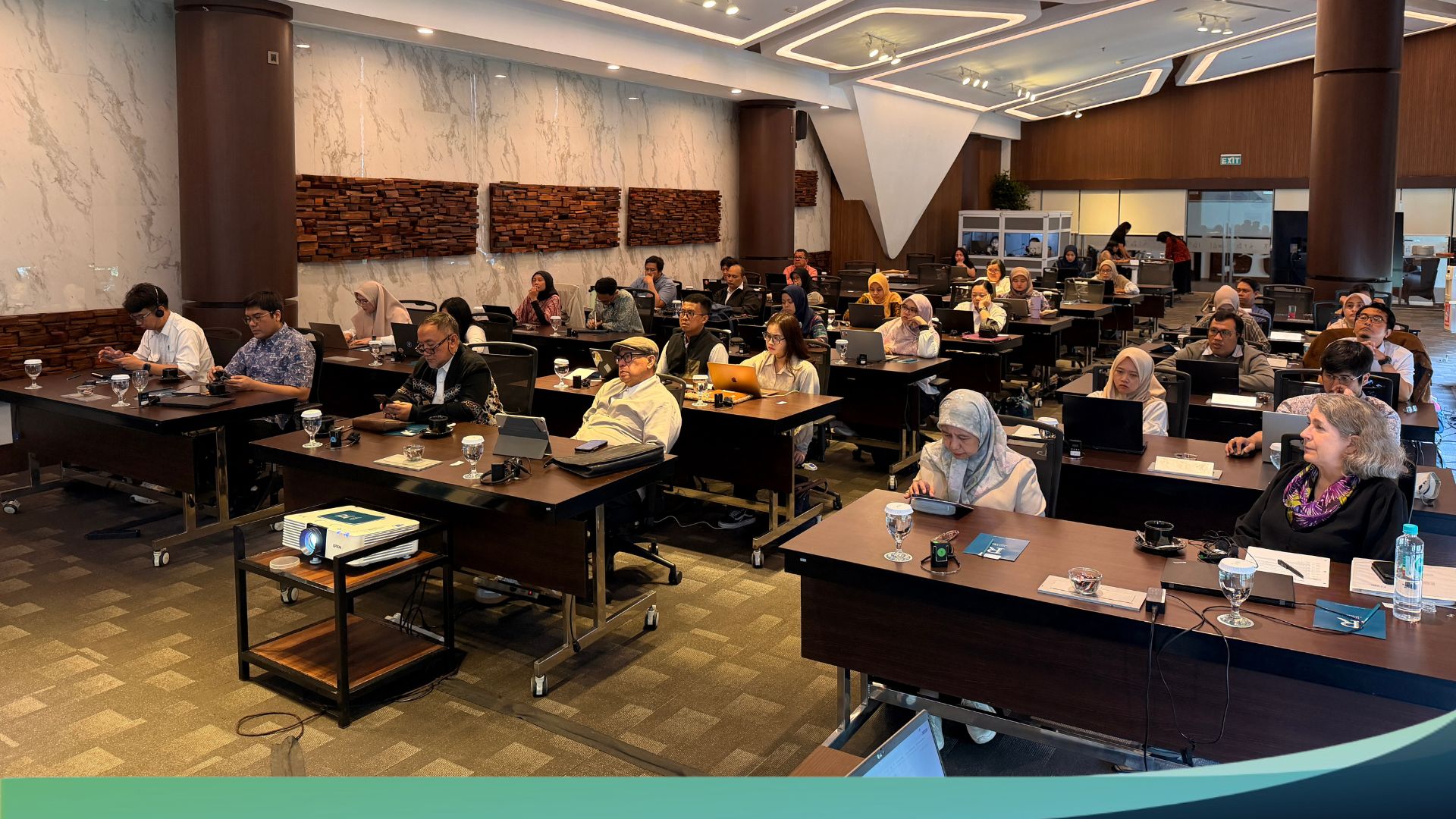
As climate change and biodiversity loss become increasingly intertwined challenges, Indonesia is currently working to strengthen coordination under the United Nations Framework Convention on Climate Change and the United Nations Convention on Biological Diversity ahead of the 2026 COP summits. Due to this condition, the Ministry of Environment (KLH), through its National Focal Points, held a three-day training workshop in Bogor, focused on practical negotiation expertise—ranging from drafting texts to building alliances.
Organized by GIZ Clarity Indonesia and GIZ Bioclime in collaboration with the International Institute for Sustainable Development (IISD), the workshop also fostered stronger synergy between climate and biodiversity teams, ensuring a more unified Indonesian engagement in informal consultations, coalition coordination, and text-based negotiations.
What set this workshop apart was its centrepiece: conference simulation designed to immerse participants in the factual situation of international climate negotiations. Rather than merely observingthe machinery of diplomacy from a distance, attendees were handed a seat at the table—assigned to represent blocs ranging from the G77 and China to the Umbrella Group and the European Union. The exercise was not theatrical flourish. Nevertheless, it was by design, which ultimately reconstructs complexity: eleven parties, multiple contested issues, and draft texts drawn from the real world, altered only at the margins.
The logic underpinning this exercise reveals a particular necessity within negotiation, while also suggesting that capability, in this context, is not innate alone but shaped and disciplined as a craft. Mastering the substance of climate talks, its proponents argue, is only half the battle; the other half belongs to skill, strategy, and the ability to read a room where every delegation arrives with its own red lines and its own silences.
Jeffrey Qi from IISD explained that the workshop also emphasized the importance of coherence across negotiation tracks, particularly in aligning national positions. Participants were encouraged to move beyond sectoral thinking and instead adopt an integrated perspective that reflects the interdependence. In this sense, negotiation is explained as a process of translation, where national urgency, political constraints, and developmental priorities are continuously reconciled within the language of multilateral agreements.
During the simulation, participants also discussed the strategic use of narrative in draft texts, the role of smaller coalitions in shifting consensus, and the persistent tension between national interest and collective responsibility. These exchanges were intended to familiarise participants with a context in which negotiation spaces are shaped as much by what remains unsaid as by what is formally declared.
Taken together, both GIZ, KLH and IISD jointly designed this simulation to strengthen the capacity of Indonesian climate and biodiversity negotiators and technical experts to engage more effectively—and more strategically—in multilateral processes. It places particular emphasis on the less visible dimensions of negotiation, from informal consultations and coalition-building to the careful navigation of text-based bargaining.
At the same time, it however offers participants a structured setting in which to formulate, articulate, and defend national positions, while deepening their understanding of the increasingly intertwined agendas of climate and biodiversity. The broader aim extends beyond technical proficiency to include a stronger sense of confidence and preparedness for future participation in forums such as the UNFCCC and the Convention on Biological Diversity, where outcomes are often shaped as much by agility and coordination as by formal mandates.