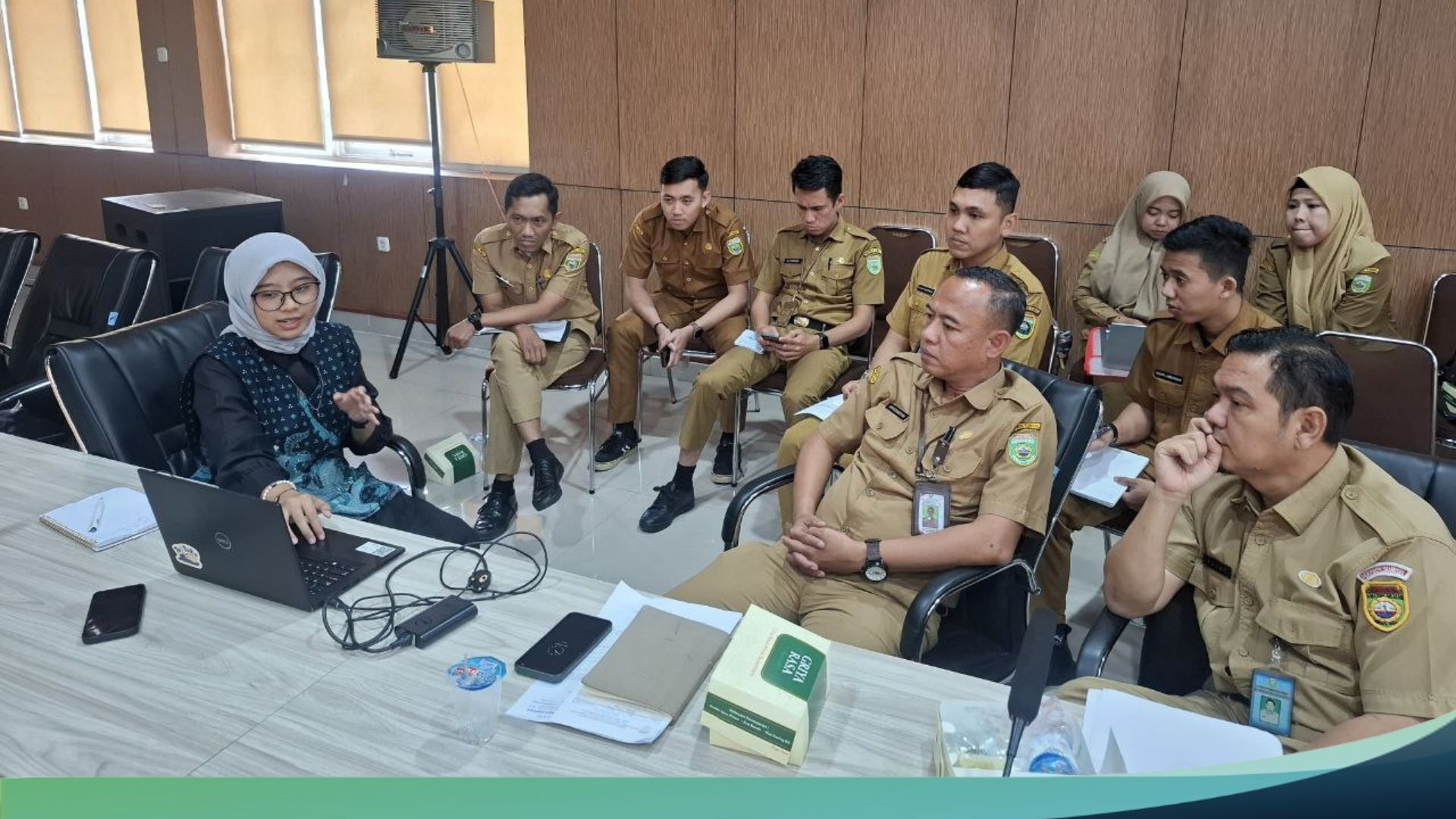
WRI led the discussion with government officials © WRI
In July 2025, WRI Indonesia began formally supporting South Sumatra’s Low Carbon Development Plan (RPRKD). Since then, the collaboration has evolved from formal agreements to a dynamic shared effort to understand current emissions and how policy can shape a different future.
From 19 to 20 January 2026, the South Sumatra Provincial Development Planning Agency (Bappeda) brought together working groups on low-carbon development from across the province and its districts. These groups were made up of people representing different sectors, each with their own perspective. During a series of focused discussions, they examined emission baseline projections and explored policy pathways ranging from immediate steps to long-term strategies.
What distinguished the discussions was not only their technical depth — though that, too, was impressive — but the fact that seventeen districts had come to the table at all, each with its own terrain, its own economy, its own particular relationship to the idea of a low-carbon future. Together, they were not merely attending a forum. They were negotiating the shape of development itself.
Provincial and local governments engaged with a seriousness that felt, to those in the room, like something more than diplomatic habit. It signalled commitment — and, perhaps more meaningfully, a growing confidence that the climate transition need not be imposed from above as an abstraction, but can be built from the ground up, region by region, anchored in the realities and possibilities that each place already holds.