October 2025
Gandhabaskara Saputra, Communications Focal Point, Resilient Nature, [email protected]
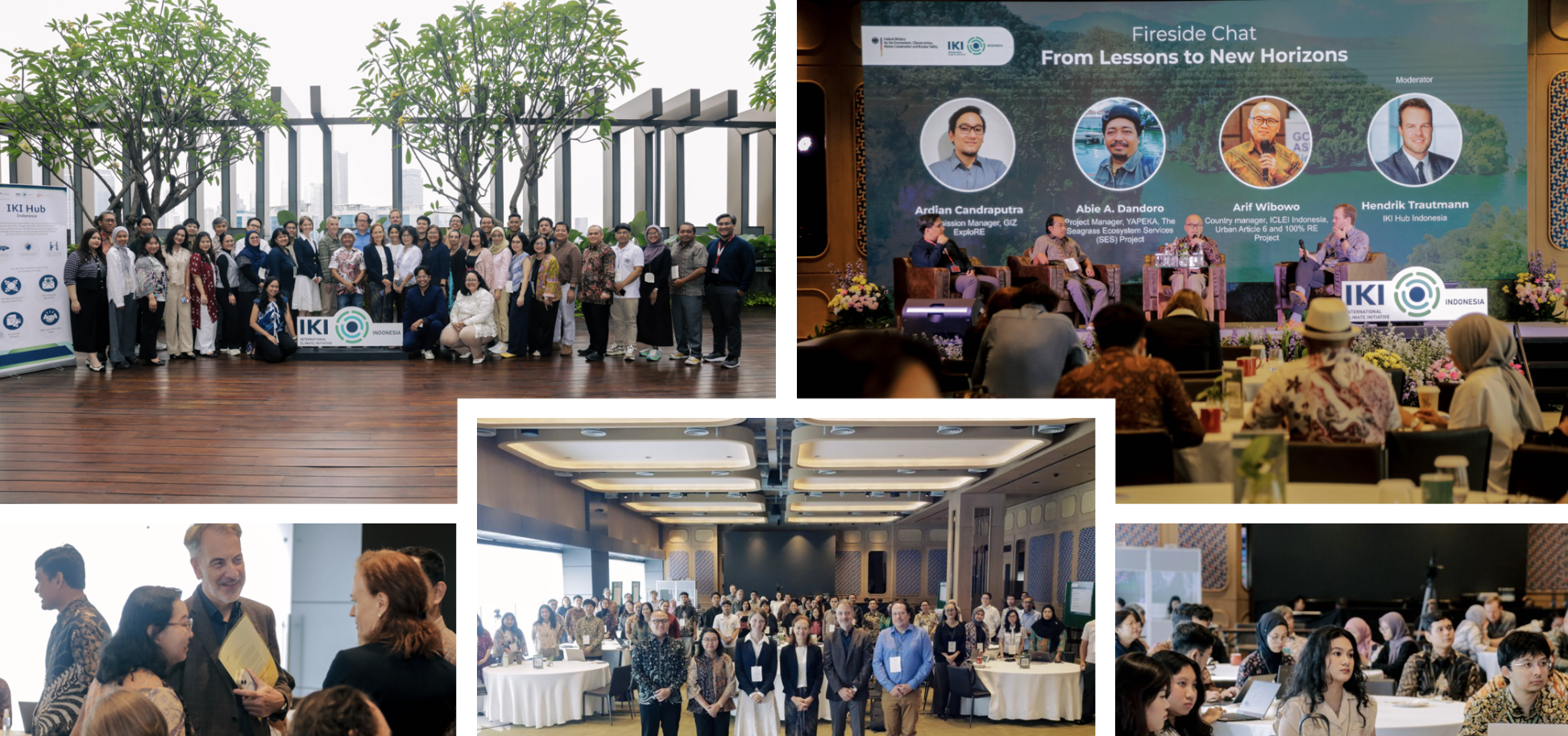
© IKI Hub Indonesia – The 7th IKI Interface Workshop
The 7th IKI Interface Workshop on Biodiversity and Climate Change signified a strategic leap for Indonesia’s green development, convening swift minds in Jakarta under the auspices of the IKI Hub Indonesia. More than three dozen representatives from ministries, project partners, international financiers, and development agencies navigated an agenda packed with speed networking, project mapping, and fireside conversations—each designed to catalyze collaboration across Indonesia’s archipelago.
Linking Ideas, Mobilizing Synergies
Karin Allgoewer, Program Manager of IKI Climate and Biodiversity Hub Indonesia, set the tone: “This is not simply an exchange. It is a launchpad.” Her appeal for resourceful networking was echoed by Nizhar Marizi and Setyawati, senior officials at Indonesia’s Ministry of National Development Planning (Bappenas). They insisted that external technical and financial support by IKI has evolved beyond monetary value—it is now a critical trust-builder and policy accelerator, aligning directly with Indonesia’s 2025–2045 vision.
“Partnerships are the bedrock for a green transition,” Marizi said, emphasizing the imperative for multisectoral cooperation. In a poetic twist, Setyawati closed her remarks with a traditional rhyme, underscoring the shared commitment between Germany and Indonesia for a sustainable tomorrow.
The German perspective arrived with Maike Lorenz, Head of Climate and Environment at the Embassy in Jakarta, who spotlighted Indonesia’s pivotal role as an IKI partner country, home to more than 40 active projects pushing the boundaries of climate action, inclusion, and sectoral innovation.
Expanding Indonesia’s IKI Footprint
Allgoewer recounted IKI’s journey from its first initiative in 2008 to today’s robust portfolio: 45 active projects spanning Sumatra to Nusa Tenggara, managed by GIZ, KfW, UNDP, CIFOR, and local partners. These initiatives cut across climate mitigation, biodiversity protection, adaptation, and natural carbon sinks.
Dr. Uwe Ballhorn then outlined IKI’s global impact—over €7.5 billion in support for more than 1,000 projects since 2008—and previewed the IKI Strategy 2030. The roadmap promises new mechanisms to mobilize private capital and scale transformative projects, with fresh institutional reforms and cross-cutting priorities such as youth engagement and social safeguards.
Networking at Speed, Mapping for Impact
A highlight was the “speed networking” session, where participants in three brisk rounds surfaced linkages, technical strengths, and opportunities for joint ventures. Attendees wore name tags made from seed paper—a subtle nod to the event’s sustainability ethos.
A quick Mentimeter poll yielded a 4.6/5 satisfaction rate for the format, with conversations traversing wildlife corridors, marine governance, and green infrastructure. At Table 6, GIZ, ICLEI, WWF, and UNDP assessed pathways for wildlife, natural capital, and sustainable protected areas.
The mapping exercise proved equally popular: teams identified links between their work and national as well as global frameworks, from Indonesia’s updated NDC targets to the Global Biodiversity Framework and NBSAP. Visualizing these connections, attendees used sticky notes and project codes, priming future synergies, and clearer reporting to ministries.
Practical Lessons, Forward Outlook
A fireside chat with Arif Wibowo, Abie A. Dandoro, and Ardian Candraputra delivered hard-won lessons from completed projects—emphasizing scale, policy linkages, and investor readiness for renewables, alongside the potential of blue carbon and community enterprise for Indonesia’s many islands.
Virtually, Irawan Asaad from the Ministry of Environment explained updates to Indonesia’s NDC (now Version 3.0), which expands coverage to HFCs, integrates the blue carbon sector, and applies new technical standards for implementation through 2035.
From Berlin, Philipp Behrens (BMUKN) relayed continuity in IKI programming, new funding calls—including Large Grants scheduled for COP30—and reaffirmed biodiversity and private investment as strategic cores of IKI’s 2030 ambitions.
Closing Thoughts: Network, Innovate, Institutionalize
As the workshop drew to a close, the IKI Hub underscored its commitment to ongoing knowledge exchange and innovation. The current interface project is slated to evolve after April 2026, urging implementers to harness this growing network—to scale what works and institutionalize successful models as Indonesia charts its climate-biodiversity future.