June 2025
Written by Fiferi Murni, Programme Manager of Scaling SCP, [email protected]
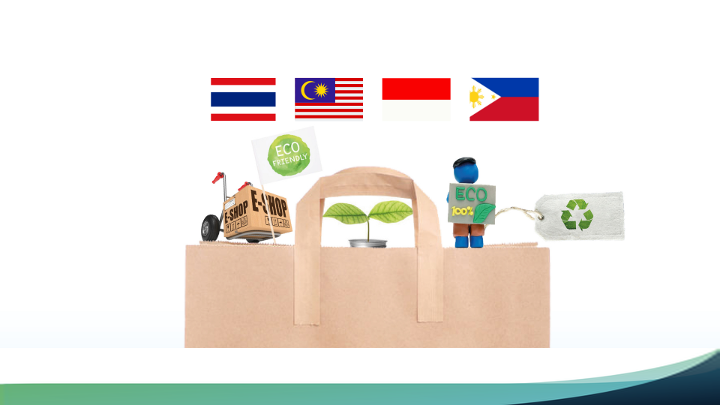
Public procurement is one aspect that drives economic growth in various fields. Both physical and non-physical fields are large expenditures and have an impact on economic activities as well as improving the quality of development, both infrastructure and social development. One aspect that needs to be encouraged in this procurement is in terms of increasing the number of ecolabel products that can be purchased in public spending. This is one small effort that will have a big impact on reducing greenhouse gas emissions. In addition, socially, this spending is an effort to increase the economic value of a product and in expanding the impact of spending to the wider community.
The Scaling Sustainable Consumption and Production (Scaling SCP) project, which has been running since 2022 to 2025, is committed to increasing the list of goods that can be offered to the government procurement market. These goods are expected to become products that can be purchased and then used in mass people so that they can have a good impact socially, economically and environmentally. The increase in the number of these products has also been followed by the initiation of a pilot project for SPP of goods and services. This pilot project has gone through planning and agreement between the parties, both in the central and regional governments. The activity run in 2024 and attended by 5 provincial governments with variations in implementation, in terms of products, the number of participating SKPDs and the planned pilot amount.
The project spent approximately three years preparing for the pilot implementation. This preparation included assessments, the introduction of ecolabel products and a sustainable public procurement framework, capacity building activities, and lessons learned from other countries.After running for almost a year, the activity has provided many lessons for the project and especially for the central and regional governments. The activity was attended by the Riau Islands Province, East Java Province, South Kalimantan Province, East Kalimantan Province and South Sulawesi Province. For the average achievement, all reached more than 80% with the most purchased products being paper, AC and LED lights. The achievement also became higher with the increase in commitment in the revised APBD made after the socialization activity. For the 2025 planning, even with the efficiency at the government level, South Kalimantan Province remains committed to being able to carry out an independent pilot by budgeting 17 billion Rupiah. Meanwhile, for the achievement in terms of policy, it is by including the issue of SPP in the South Sulawesi Provincial Long-Term Development Plan through Pergub No. 7 of 2024.
After exposure to the SPP Indonesia Steering Committee, it was suggested that the activity could be carried out by mandatory it because so far it has been running voluntarily. In addition, this activity is also expected to be carried out by the central government so that it can have a wider impact. At least the activities can be implemented by ministries that are members of the Steering Committee before being mandatory and expanded to all ministries. The goal is in terms of reducing greenhouse gas emissions in reducing the use of conventional products that are not environmentally friendly and not energy efficient.