October 2025
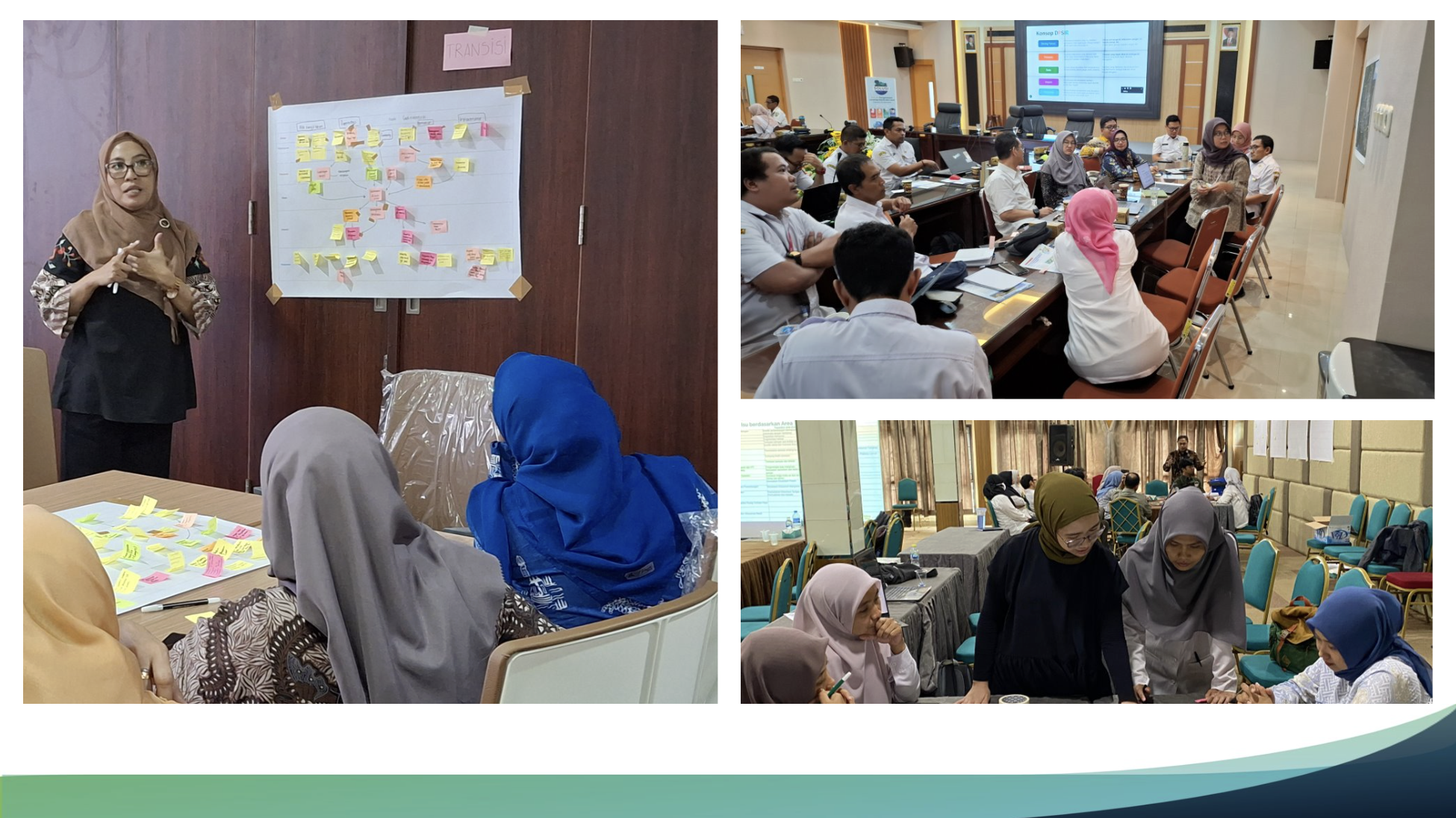
© The FGD process using the DPSIR (Driver, Pressure, State, Impact, Response) framework in Bangka Belitung, Central Java, and Central Sulawesi.
The Focus Group Discussion (FGD), held in mid-June 2025 in the Bangka Belitung, Central Java, and Central Sulawesi Province, brought together various stakeholders to discuss integrated land and seascape management. The forum served as a cross-sector collaboration platform to outline directions for sustainable management at the regional level.
Using the DPSIR (Driver, Pressure, State, Impact, Response) framework, participants succeeded in identifying strategic issues that will form the basis for preparing both a master plan and a capacity-building roadmap. “We identified several key aspects that could serve as indicators for land–seascape integration,” said Yeyen Mardyani from the Development Planning Agency (Bappeda) of Bangka Belitung Province.
The importance of inter-agency cooperation was also highlighted. Budi Jatmiko from the Kebumen’s Bappeda-Central Java stated, “This FGD has raised awareness that managing land and seascapes requires a multi-sectoral and multi-regional approach. We also gained an overview of strategic issues along with indicators for future monitoring.”
One of the keys to success in land–seascape management is the development of an integrated ecosystem-based data system to guide decision-making. In addition, applying sustainable development principles—such as nature-based solutions and local community engagement—is expected to preserve ecosystems while providing socio-economic benefits.
Looking ahead, the master plan will be strengthened by the establishment of Working Groups (Pokja) to ensure alignment with regional documents such as medium-term development plan (RPJMD), spatial plan (RTRW), and marine spatial plan (RZWP3K). With a clear roadmap and effective monitoring, land–seascape management is expected to become more efficient and sustainable.