January 2026
Marcell Sinay, Advisor; Deni Gumilang, Project Lead, CASE Indonesia
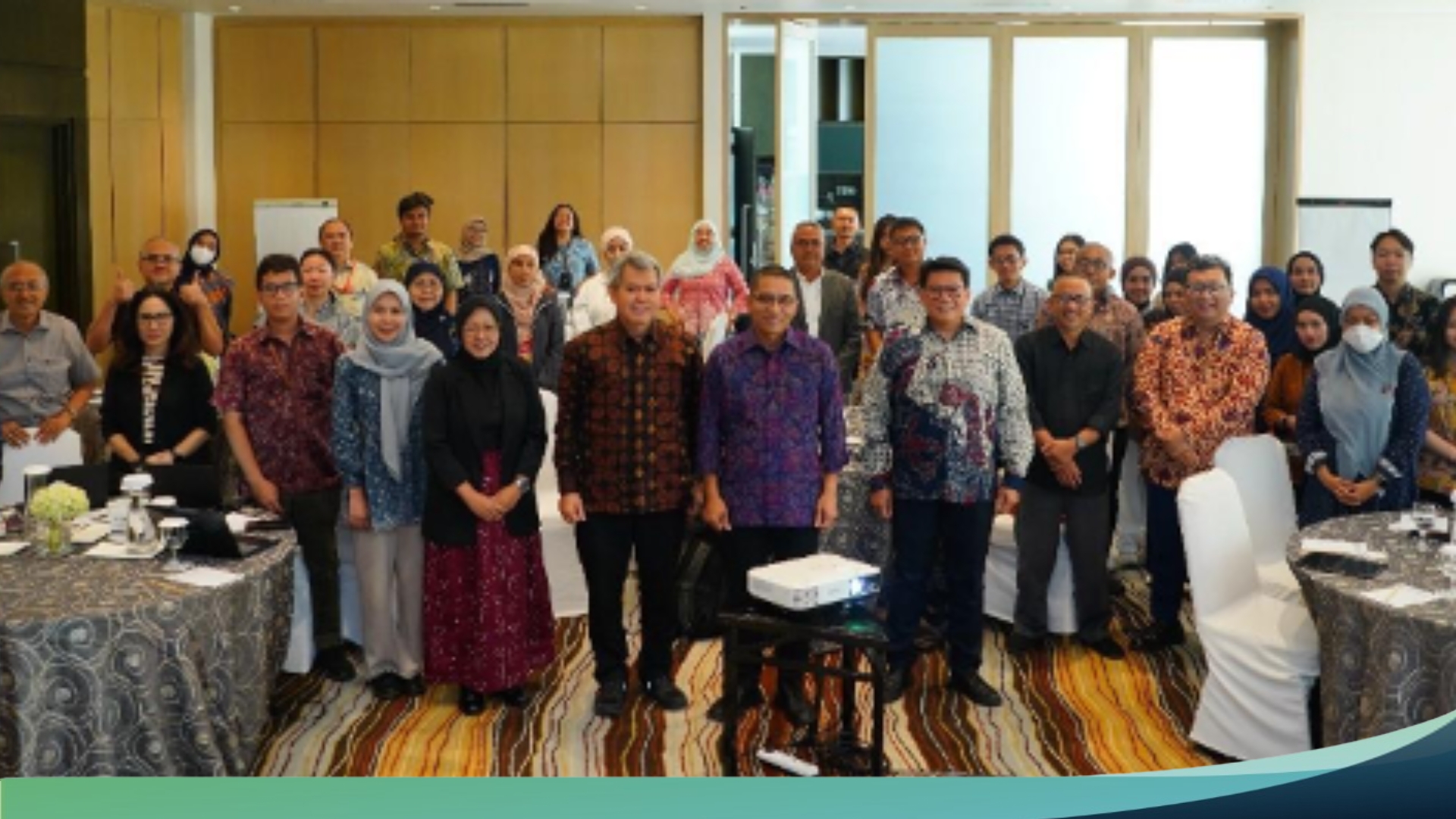
PP KEN Dissemination, a dialogue to strengthen the stakeholder’s knowledge on the newly implemented policy and gain feedback on energy transition implementation readiness.
On 16th December 2025, in Jakarta, the CASE Project, in collaboration with the Secretariat General of the National Energy Council (DEN), organized the “Dissemination of National Energy Policy (KEN) 2025: Dialogue on Synergy and Implementation of KEN Policy”. This activity formed part of a broader effort to disseminate the energy transition agenda under Government Regulation (PP) No. 40 of 2025 on the National Energy Policy (KEN).
Through panel sessions and group discussions, the workshop aimed to improve stakeholders’ understanding of the substance, targets, and strategic direction of PP KEN 2025, encourage policy alignment and coordination, and facilitate multi-stakeholder dialogue in identifying challenges and opportunities for implementing KEN in an inclusive, collaborative, and equitable manner.
The event highlighted varying levels of readiness across sectors and regions, particularly in terms of data availability, institutional capacity, and financing mechanisms. It also underscored the importance of cross-sector coordination to address systemic challenges, including grid readiness for variable renewable energy, land availability for renewable energy development, and the need for social safeguards to ensure a just and inclusive energy transition.
In the event, Fabby Tumiwa, Project Lead for CASE IESR, delivered a compelling call to action that reframed the energy transition not merely as an environmental obligation but as a strategic engine for national survival and economic growth. In an era of geopolitical conflict and supply chain disruptions, the speech highlighted a hard truth: dependence on fossil fuel imports is a strategic risk. With global energy prices fluctuating and the world pivoting toward clean technology, Indonesia stands at a crossroads. The new KEN 2025 is the nation’s decisive response—a shift from being a spectator of global trends to a leader in renewable adoption.
One of the forum’s key moments was its direct alignment with President Prabowo Subianto’s target of eight percent economic growth. “The energy transition is not a barrier to growth; it is the ultimate enabler,” Fabby observed. By harnessing domestic solar, hydro, geothermal, and wind resources, Indonesia can reduce its dependence on imports, stabilize the macroeconomy, and draw high-quality green investment into its industrial base.
Participants also emphasized that the next five years must serve as a decisive period of correction and acceleration. With policy consistency, cross-sector synergy, and grid modernization as priorities—alongside the rapid scaling of ready projects and competitive incentive schemes—Indonesia has an opportunity to translate ambition into reality. The era of planning, they suggested, is ending; what lies ahead is a phase of disciplined execution to secure the country’s energy transition.