January 2026
© Relung; Community-Based Agroforestry Enterprises for Sustainable and Collective Land Use Project
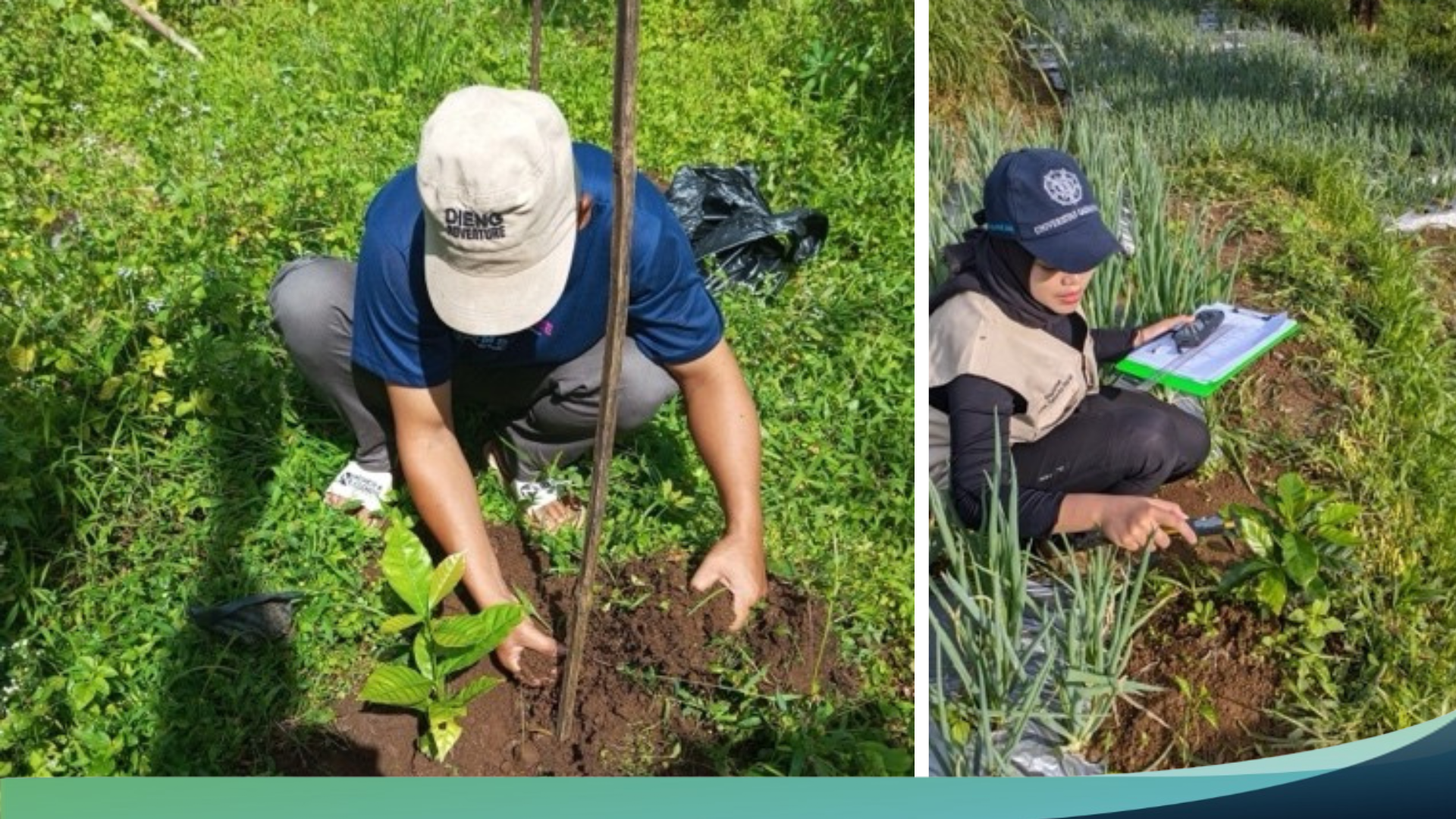
As part of a pilot agroforestry initiative, coffee monitoring was conducted six months after planting in Petungkriyono District, Central Java. The activity aimed to evaluate early survival, growth performance, and plant health of Arabica and Robusta coffee cultivated under an agroforestry system, while also testing efficient monitoring tools for long-term landscape programs.
Using a Forest Health Monitoring (FHM) approach, the assessment examined survival rates, plant height, stem diameter, leaf development, and indicators of biotic stress across multiple farmer groups and elevation zones. The results point to an exceptionally high level of early success, with survival rates reaching 99.20 percent for Arabica and 99.49 percent for Robusta—evidence of strong early-stage adaptation and careful site selection. Robusta showed more vigorous initial vegetative growth, while differences between locations underscored the role of management quality alongside ecological conditions.
Pest and disease pressures remained low and manageable, suggesting that the agroforestry system supports plant resilience without heavy reliance on chemical inputs. At the same time, nutrient-related symptoms such as chlorosis signal the need for more targeted soil and nutrient management in the project’s next phase.
A key operational learning was the adoption of KoboToolbox for data collection, reducing field monitoring time by approximately 36% compared to manual methods. This digital approach enhances data accuracy, transparency, and scalability—critical elements for donor-supported programs requiring evidence-based reporting and adaptive management.
Overall, the monitoring confirms that coffee-based agroforestry in Petungkriyono offers strong early impacts and a solid foundation for sustainable, climate-resilient livelihood development at landscape scale.