Indonesia’s current development cycle, as reflected in the National Development Plan 2025–2029, has begun to recast biodiversity in a more expansive light. Notably, within the Priority Program for Ecosystem, Species, and Genetic Biodiversity Management, which is aligned with the Indonesia Biodiversity Strategy and Action Plan (IBSAP) 2025–2045, two separate studies are being developed to optimize bioprospecting and gender mainstreaming as part of a nationwide collaborative effort. As an initial phase of implementation, pilot activities are being conducted in three provinces: Central Java, Bangka Belitung, and Central Sulawesi. Spearheaded by the National Development Planning Agency (Bappenas) in partnership with the nationally implemented SOLUSI project consortium, this initiative reflects a persistent effort to embed biodiversity governance within broader development and equity agendas.
Within this evolving collaboration, the implementation of the two thematic studies has been taken forward by specialized implementing partners. The bioprospecting component is being conducted by SEACREST Indonesia, whose expertise in biodiversity research and development supports a scientifically and technically grounded assessment of Indonesia’s biological resource potential, while the study on Gender and Biodiversity is undertaken by KONSIL LSM, ensuring that gender mainstreaming becomes a key aspect in responding to challenges regarding participation and benefit-sharing within biodiversity governance frameworks.
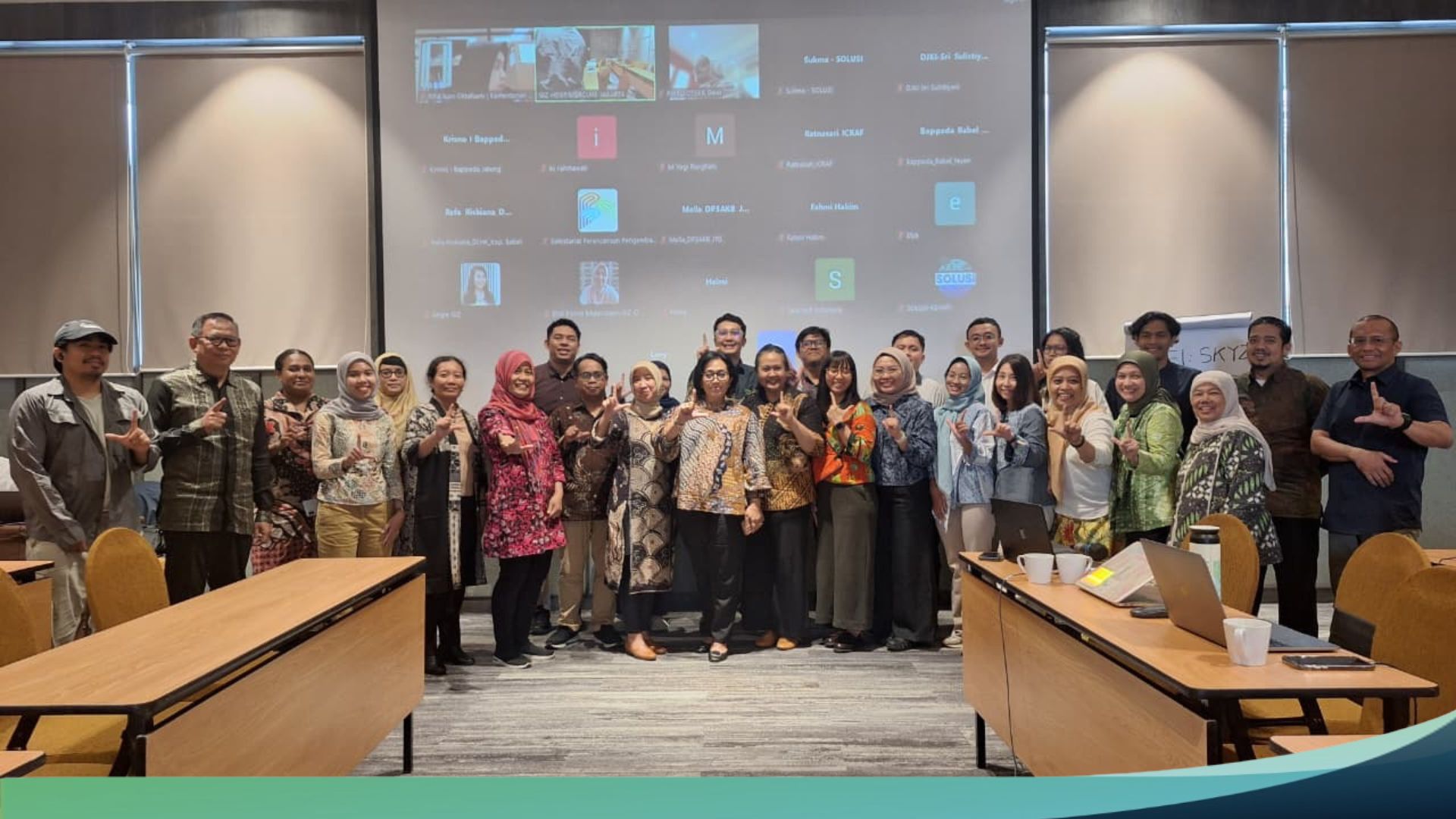
As part of this ongoing coordination process, on 19th of February 2026 Bappenas and GIZ convened a focus group discussion in Jakarta to ensure alignment with national policy frameworks and to gather technical inputs, policy feedback and recommendations for the refinement and finalization of a study on bioprospecting development and gender mainstreaming in biodiversity management. The purpose of this forum was to provide a platform for reviewing regulations, while strengthening the alignment between innovation, equitable participation, and sustainable biodiversity governance.
Billy Giovani, representing the Directorate of Forestry and Water Resources Conservation at the National Development Planning Agency, noted that good practices identified across several pilot regions must be better aligned with both central and regional government policies. He also added that commitments to multi-stakeholder participation require deeper exploration, particularly to ensure that local innovations and local knowledge in biodiversity management and gender inclusion are not treated as isolated discourse but integrated into a broader spectrum of strategies.
Speaking about gender, the Ministry of Women Empowerment and Child Protection, through its Assistant Deputy for Gender Mainstreaming, Dewa Ayu Laksmi, emphasized that utilizationand access to natural resources for bioprospecting must urgently incorporate a gender perspective. The ministry is currently preparing a cooperation agreement with Indonesian Food and Drug Authority (BPOM) to strengthen gender-responsive assistance in the development of medicinal and cosmetic products, she added. This step aims to enhance women’s capacity and economic empowerment through structured certification and mentoring schemes.
The convergence of these two topics is also evident in the forestry sector. A representative from the Directorate of Social Forestry Control noted that gender considerations within social forestry schemes remain limited and require stronger facilitation and mentoring mechanisms to ensure meaningful participation. At the same time, social forestry products require clearer economic valuation to strengthen their market position and long-term viability. These remarks underscored a shared imperative to deepen gender-responsive governance while enhancing the economic credibility of bioprospecting.
The forum also highlighted that gender, biodiversity and bioprospecting development are not integrated into a single unified framework but remain distinct yet interlinked domains. Bioprospecting is a key issue within gender and biodiversity studies, while conversely, the gender dimension is critical to bioprospecting discourse and practice.