Like the eel, granted only a single chance to reproduce, humanity too is given just one fragile chance to care for the Earth that sustains it
Though often applauded as Asia’s epicentre of marine biodiversity, Indonesia still faces a deep backlog of marine unresolved challenges. Rather than a privilege that invites complacency, the distinction imposes a permanent responsibility.
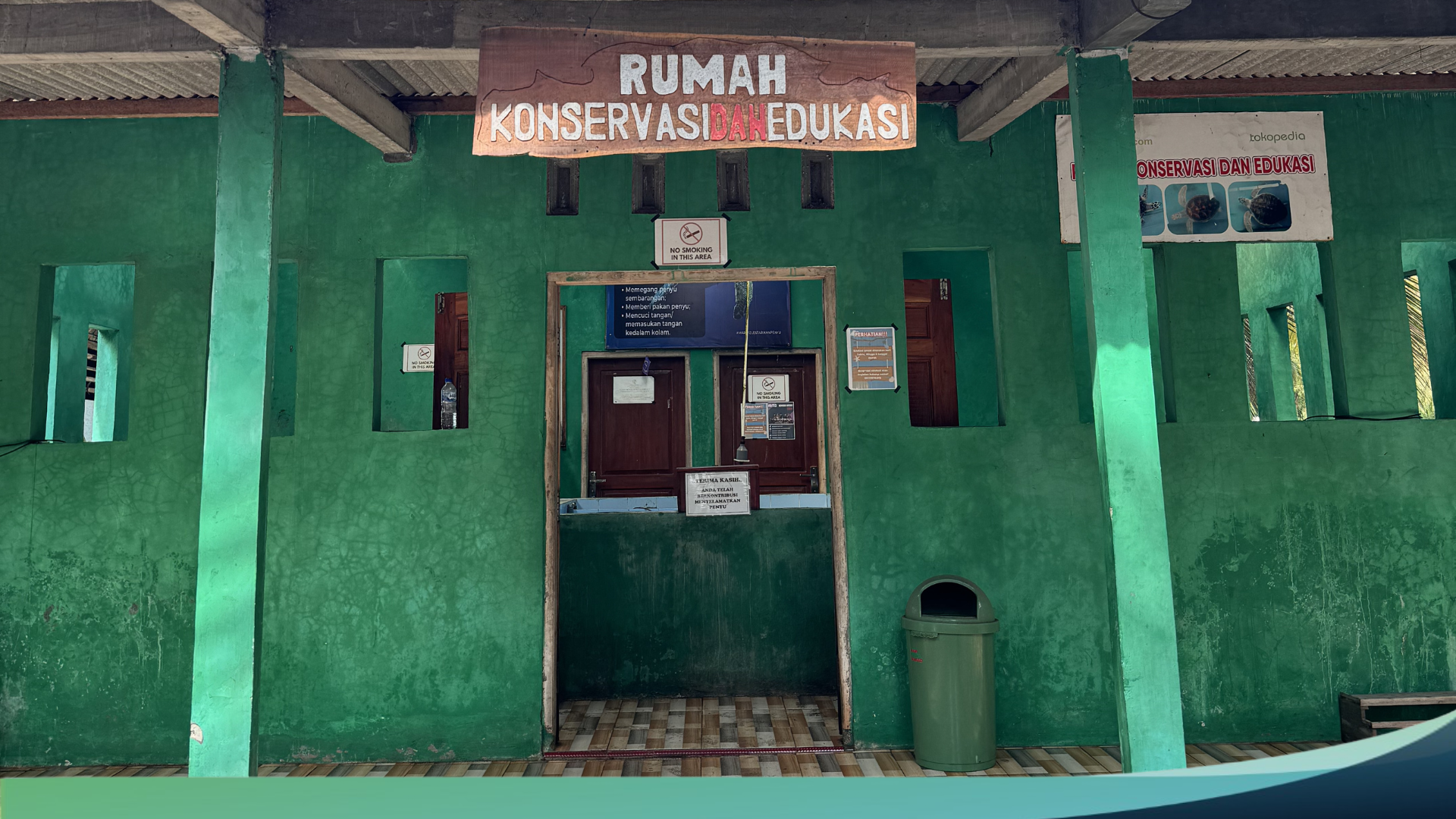
Moving away from extractive coastal practices toward sustainable, nature-based, and climate-resilient conservation—this is how the coastal village of Lembupurwo, Jogosimo, Tambakmulyo in Kebumen were introduced to biodiversity protection through sea turtle and eel conservation, community-driven waste management, and the strengthening of local economies rooted in participatory ecotourism.
The broader initiative is delivered through collaboration between the SOLUSI consortium and GIZ Indonesia, as part of an Indonesia–Germany partnership led by Ministry of National Development Planning of the Republic of Indonesia (BAPPENAS) and the German Federal Ministry for the Environment, Climate Action, Nature Conservation and Nuclear Safety BMUKN, with funding from the International Climate Initiative (IKI). In Kebumen, the program is implemented by local partner Yayasan Terangi through the “Kebumen Lestari” initiative.
On the site, in sum, the project has taken tangible form through the rehabilitation of five hectares of mangrove and coastal forest, the development of community-based management plans to safeguard sea turtles and eels, and sustained public education through Sekolah Pantai Indonesia (SPI), a local-oriented learning program that invites local communities to translate environmental awareness into concrete collective action.
The rationale for placing eel conservation at the centre of the effort may sound familiar: nine of the world’s nineteen eel species are found in Indonesian waters, even as their populations continue to decline. Yet behind this oft-repeated fact lies a deeper, systemic question about the fragile balance of Indonesia’s river ecosystem.
Can eel farming be developed in ways that restore the species’ ecological role while strengthening local communities’ capacity to carry out long-term environmental stewardship? This is one of the specific challenges and objectives that the Kebumen LESTARI program seeks to confront.
To address this obstacle, local partner Yayasan TERANGI through SOLUSI will provide technical assistance and capacity-building support, to advance community-based conservation and sustainable livelihood initiatives across coastal and riverine landscapes, including a series of workshops throughout 2025 conducted in close collaboration with local government partners. The goal is clear: to equip the three Kebumen LESTARI partner villages with robust, long-term action plans capable of addressing the climate and biodiversity challenges shaping their coastal and riverine futures.
As a focal landscape for the SOLUSI project, Kebumen LESTARI operates clearly within a framework designed to advance two of four core targets: Land and Seascape Planning Laboratories and Capacity Building and Knowledge Management. Working across national, sub-national, and local levels, these targets are pursued through mainstreaming improved spatial and development planning grounded in green and blue economy principles, including ecosystem protection and restoration, water-pollution reduction, sustainable business and ecotourism models, integrated waste management, and expanded access to sustainable finance and responsible supply-chain partnerships.
Through a de règle framework, a structured approach, and well-defined targets, this German-Indonesia cooperation advances an integrated model that aligns climate resilience, biodiversity protection, and locally grounded development pathways. Access to fish hatchery, for instance. Edi, from Nature Conservation Group (KPA) Jogosimo, explain:
“One of the most immediately perceptible changes since the SOLUSI consortium’s framework began to take root has been the quiet ease with which seedlings can now be obtained. What was once scarce or dependant on outside provision has become locally sustained, as local communities have acquired the knowledge and skills to carry out their own cultivation.”
Such change may appear modest at first glance, yet they signal a deeper transformation, which is, the gradual transfer or capacity into local hands. In the end, perhaps it is time to accept a simple truth: like the eel, granted only a single chance to reproduce, humanity is given just one fragile opportunity to care for the Earth that sustains it.