April 2026
Sartika Simanjuntak, Monitoring and Evaluation Specialist, Sustainable Energy Transition (SETI), [email protected]
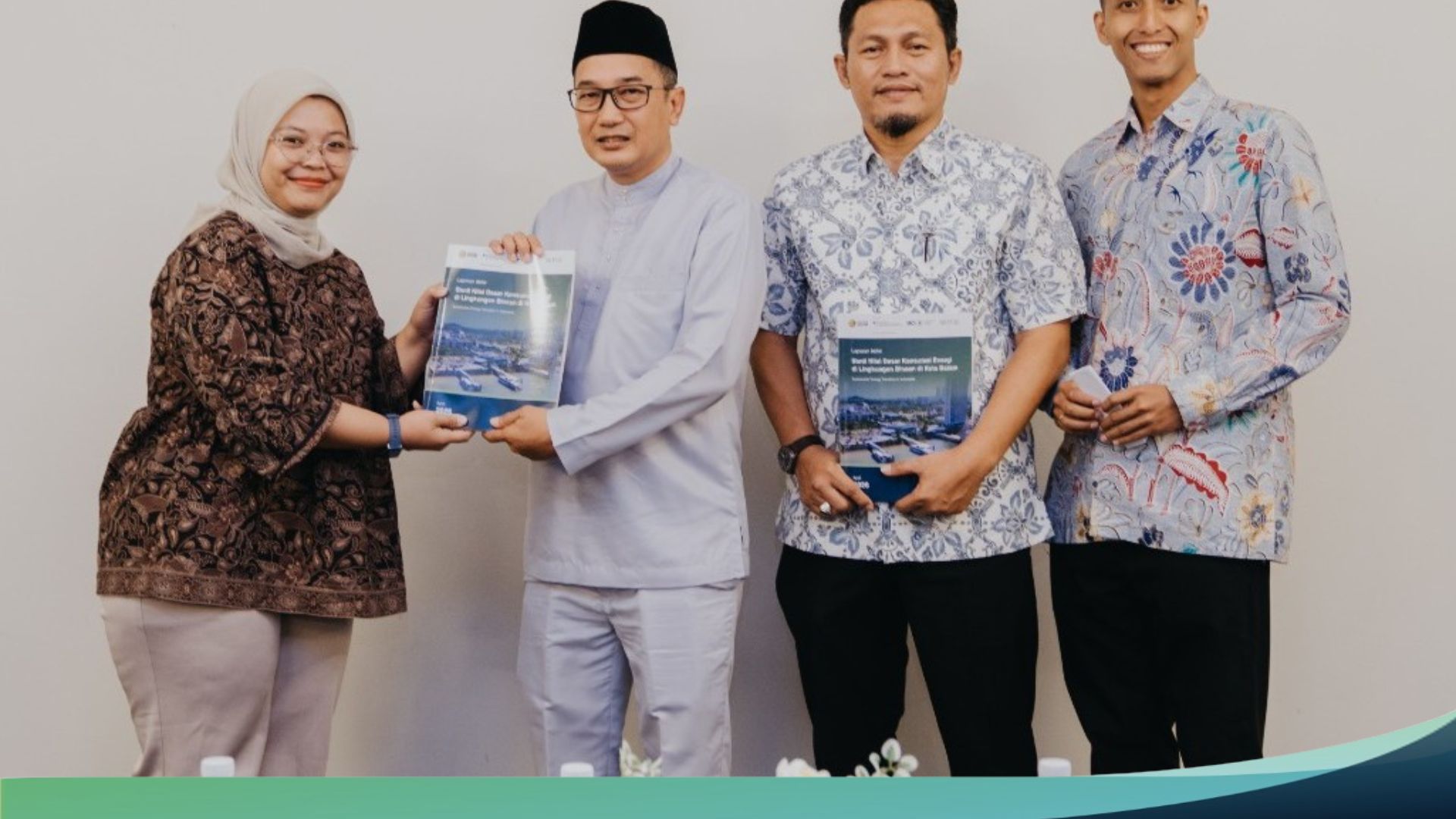
©GIZ/SETI –City and provincial officials received a copy of the Baseline Study report
The SETI project disseminated the findings of the Baseline Energy Consumption Study in Batam on 16 April 2026 to key stakeholders in Batam, marking an important step in shaping the city’s energy future. The study reveals that buildings in Batam generate more than 3.1 million tons of CO₂ annually from operational emissions, with the non-residential sector being the largest contributor. A key finding highlights that air conditioning (AC)/HVAC systems account for the highest share of energy consumption across both residential and non-residential sectors, reaching up to 68 percent of total electricity load in healthcare and hospitality buildings. This study is not just a number; it serves as a strategic reference for developing a comprehensive Long-Term Energy Plan (LTEP) for the city. A myriad of intervention scenarios, including policy interventions, will be developed together with city stakeholders to support the city’s energy and climate ambitions. The first stakeholder consultation for the development of the LTEP for Batam was held on 15 April, involving representatives from city and provincial officials, local universities, and experts. City officials appreciate the study’s findings and are looking forward to the further development of the LTEP, with more consultations planned this year to finalize the plan.