© IKI-Hub Indonesia Communications Team
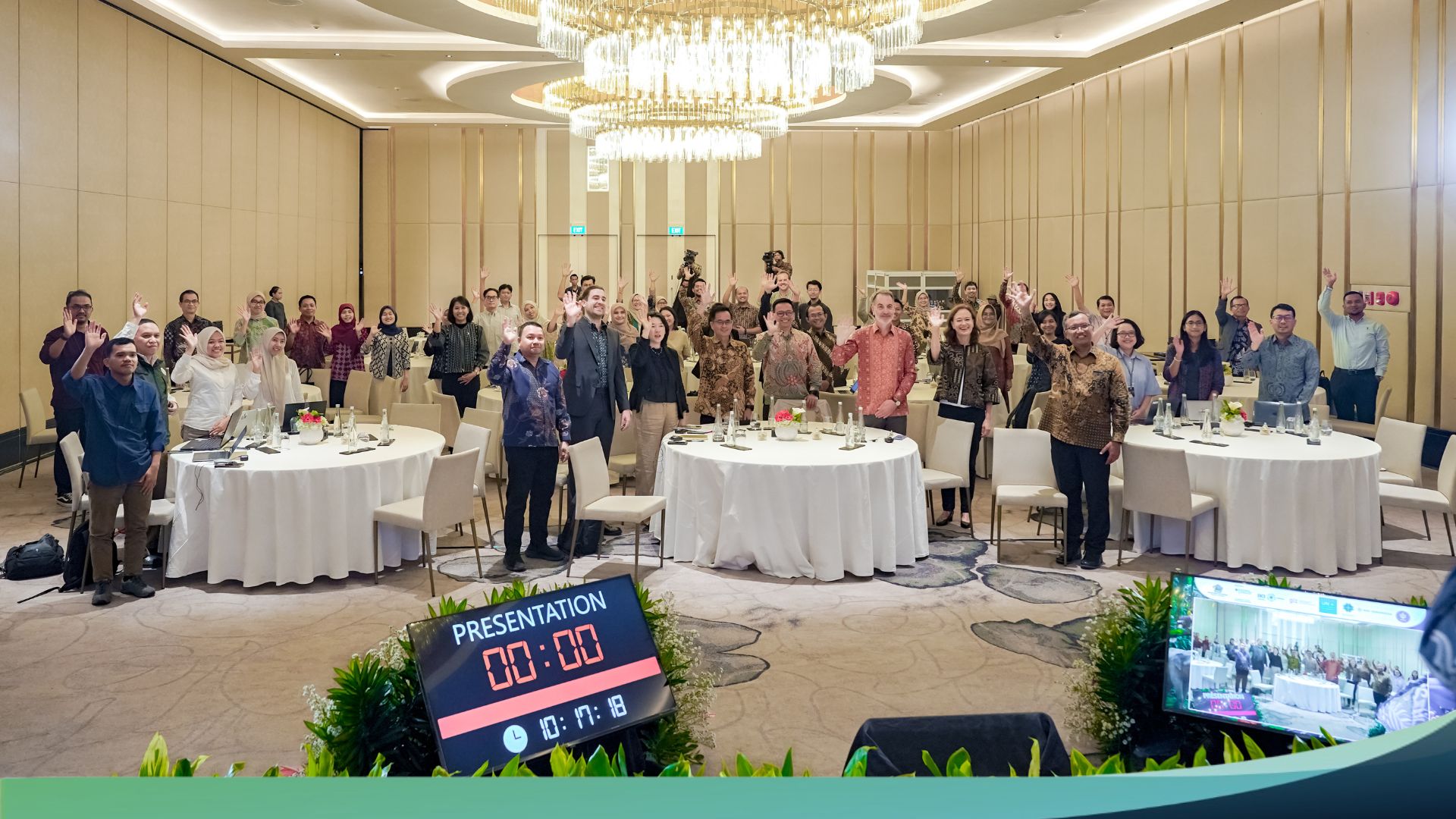
April 28, 2026, representatives from the Ministry of Finance, Deutsche Gesellschaft für Internationale Zusammenarbeit (GIZ), The International Climate Initiative (IKI), the United Nations Environment Programme (UNEP), and biodiversity stakeholders in Indonesia attended the kick-off of the Fast-tracking Transformation through Sustainable Public Finance for Biodiversity (FAST) project in Jakarta.
During the opening session, Hans Ludwig Bruns, Country Director of GIZ Indonesia/ASEAN, remarked,
“The launch of the FAST project marks an important step toward strengthening systems, frameworks, policies, and institutions. This is an important effort in mobilizing and directing financial resources to areas where they are most needed, including biodiversity. Indonesia–Germany cooperation, he noted, is moving beyond fragmented funding mechanisms toward a systemic approach that seeks to align financial governance, improve efficiency, and expand inclusivity across public institutions.”
Irwan Dharmawan, Deputy Director of the Directorate of Multilateral Cooperation and Sustainable Finance at Indonesia’s Ministry of Finance, underscored the strategic significance of the initiative. Through the project’s blueprint, public finance, later, is no longer viewed merely as an administrative instrument, but as a political and ecological praxis; one that determines where resources flow, and how environmental futures are negotiated through budgetary processes.
He emphasized that all activities developed under FAST must ultimately be implementable within existing policy frameworks, both within the Ministry of Finance and across other relevant government institutions, while remaining aligned with the vision of Golden Indonesia 2045.
Until 2030, the project is expected to receive EUR 3 million in funding. On paper, the figure may appear technocratic, yet it reflects ambitions extending far beyond a conventional budget cycle. In addition, implementation has been entrusted to the KEHATI Foundation, the World Resources Institute, and Bogor Agricultural University, with technical support from a consortium led by GIZ and UNEP, and in close institutional partnership with the Directorate General of Financial Sector Stability and Development of Indonesia’s Ministry of Finance.
At a technical level, FAST will engage with fiscal dimensions that have remained relatively underexplored, including biodiversity budget tagging, the integration of ecosystem indicators into public expenditure assessments, innovative financing mechanisms for biodiversity, and the development of green-finance taxonomies capable of being embedded within Indonesia’s national planning system.
Karin Allgoewer, Commission Manager at GIZ, emphasized that Indonesia stands at a strategic juncture, not only to adopt, but also to shape and optimize more inclusive approaches to public finance. The objective is precise: to extend beyond fiscal efficiency, and to ensure that financial flows themselves become instruments capable of accelerating biodiversity protection and supporting long-term ecological resilience.
In the context of Indonesia–Germany cooperation, FAST is more than a reporting framework or a budgeting roadmap. It represents a shared effort to elevate sustainable development through sustainable finance, translating international commitments into practical fiscal reforms.
At its core, what is collectively taking shape is a concerted effort to bring to the forefront what we have come to call sustainable development through sustainable finance. The hope is that, in the future, fiscal policy will not have to be at odds with or an obstacle to sustainability, and that public finance can be designed and implemented with the right intentions so that it can become Indonesia’s most transformative force.