October 2025
Agus Tampubolon, Project Manager CASE Indonesia (IESR), [email protected]; Deni Gumilang, Project Lead CASE Indonesia, [email protected]
Energy transition policies in Indonesia are often shaped by a techno-economic determinism approach, prioritizing technical and economic considerations while overlooking social impacts, particularly for women and marginalized communities. With the upcoming transition plan, mine closures are expected to lead to a significant decline in economic activity, affecting local communities that rely on the volatile coal industry for their livelihoods. Additionally, deploying renewable energy also requires extensive land-use change that may trigger social and ecological distribution conflicts. Particularly for women who have faced injustices, a narrow transition approach risks deepening inequalities and perpetuating vulnerabilities into post-coal futures.
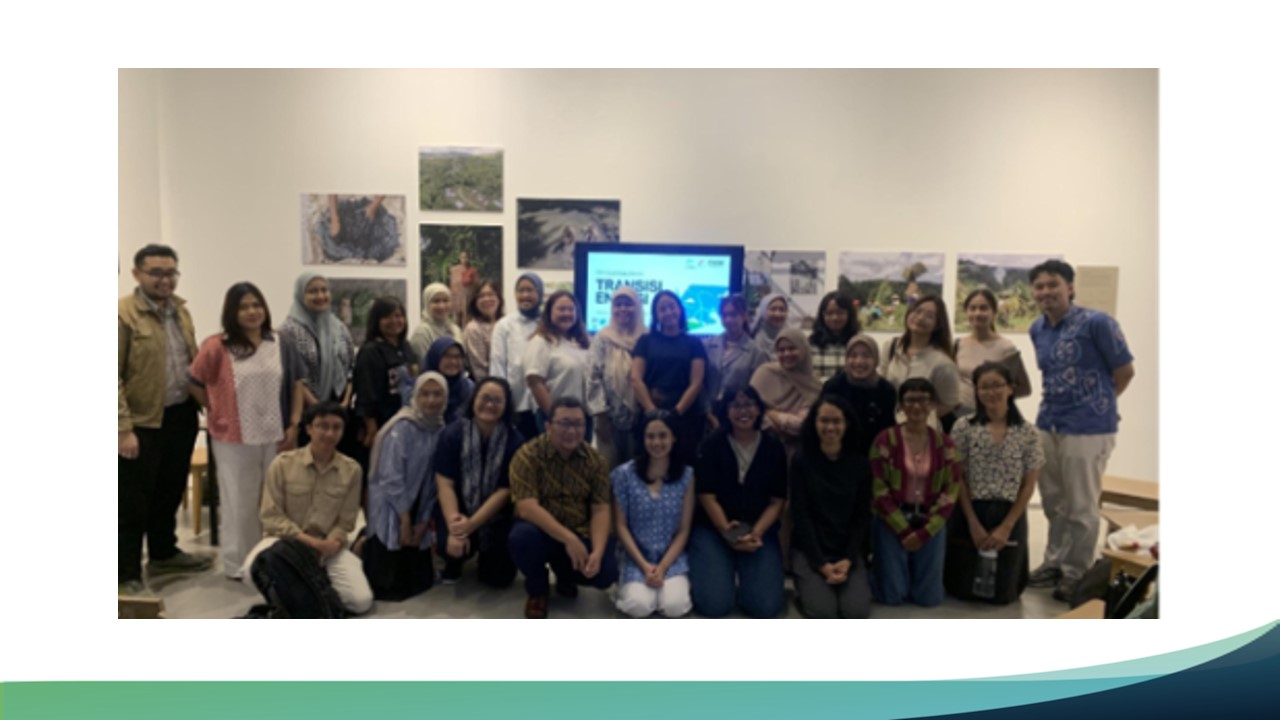
To address these challenges, the Clean, Affordable, and Secure Energy (CASE) project promotes an evidence-based narrative on just energy transition in Jakarta, on June 13, 2025, based on its ongoing study, through collaboration with communities and women’s groups. Together with the Humanis Foundation, CASE Indonesia convened 30 participants from CSOs and community organizations in a thematic dialogue under Ruang Setara dan Lestari.
The discussion revealed that women and indigenous communities are most vulnerable to transition impacts. Participants agreed that Indonesia’s energy transition must move beyond energy reform, embracing just and inclusive principles and fostering a multi-dimensional transformation that strengthens collective resilience for women and marginalized groups.