June 2025
Written by Diah Wulandari, Project Officer, SOLUSI project, [email protected]
and Dhian Rachmawati, Communication Officer, SOLUSI project, [email protected]
Integrated land and seascape management are key to driving sustainable development. To achieve this goal, a gender-responsive approach is essential to ensure that the needs, experiences, and roles of both men and women are fairly accommodated.
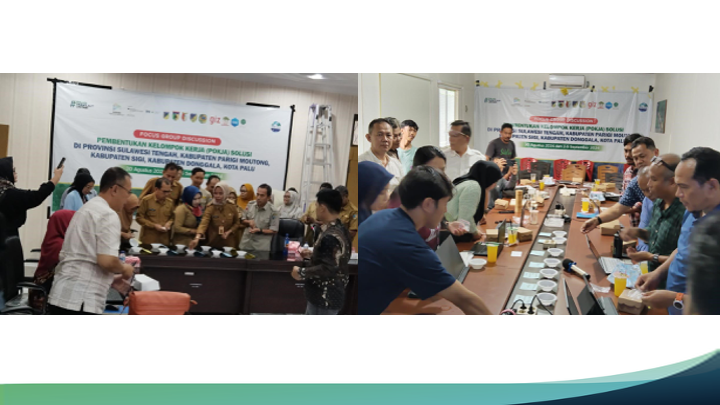
One of the efforts undertaken is the involvement of various stakeholders—both men and women—in the establishment of Working Groups (Pokja) as coordination and synchronization platforms at the regional level, both in provinces and districts.
Through a series of Focus Group Discussions (FGDs) held between August 2024 and January 2025 in several regions—including Sigi, Donggala, Parigi Moutong, and Palu City, as well as selected areas in Central Java and the Bangka Belitung Islands— a number of strategic issues were successfully identified using a participatory weighting method (pebbling method).
The results revealed differences in priorities between men and women in addressing sustainable development challenges. In Sigi, women highlighted the lack of inclusive participation, while men focused on agricultural issues. In Parigi Moutong, women emphasized low environmental awareness, whereas men were more concerned with waste management. In Donggala, air pollution emerged as the main concern among women, contrasting with men’s focus on the impact of mining activities. In Palu City, both genders agreed that disasters are a critical issue, with women placing additional emphasis on waste problems.
These differences underscore the importance of gender mainstreaming in policymaking. By incorporating gender perspectives, landscape management becomes not only more effective but also ensures justice and equitable well-being for all members of society.