June 2025
Written by Aisyah Putri Lestari and Enggi Dewanti
WRI Indonesia – 2050 is Now Project
[email protected] and [email protected]
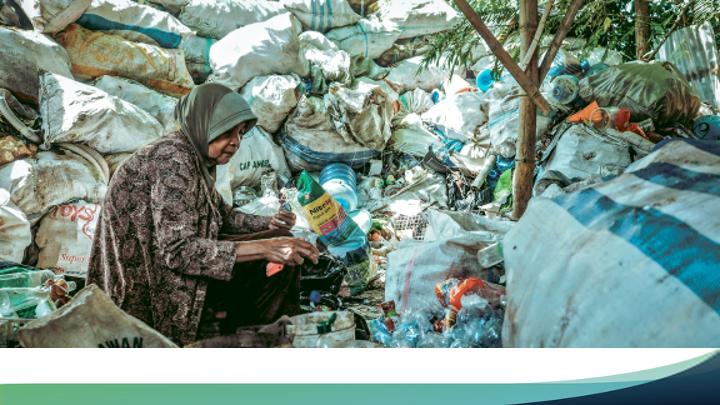
This year’s World Environment Day urges people to take active steps in addressing plastic pollution. However, have you considered plastic that has been left at the waste dumping site for too long?
Bantar Gebang, Indonesia’s largest Integrated Waste Management Site, has been operating since 1989 with a total waste capacity of 7,708 tons per day, consisting of 35% recyclable plastic. Plastic waste mixed with organic waste in landfills indirectly accelerates the release of methane from the degradation of organic material.
Plastic does not decompose naturally like organic material, but its presence, mixed with organic waste and piling up in landfills, creates conditions that support the formation of methane gas by inhibiting air circulation from the organic waste.
Methane gas produced emissions 28-36 times higher than carbon dioxide (CO₂) over 100 years. In Indonesia, methane emissions have increased since 1990, with the waste sector experiencing the most significant increase, at 3,703%. Regarding waste management, methane gas can originate from landfills and wastewater treatment facilities. Surveys also indicate that awareness and the practice of waste separation in Indonesia remain low. Only about a third of respondents consistently separate their waste.
So, how can we reduce emissions and plastic pollution?
1. Reduce the use of single-use plastics and increase recycling and upskilling efforts.
2. Improved landfill management by a methane gas capture system as an energy source.
3. Enhance waste sorting and separate organic and inorganic waste.
4. Implement a circular economy by reusing plastics and composting organic waste at the household level.
We presented several key activities from the “2050 is Now” initiatives, including (1) development and strengthening of national and sectoral models, i.e. industry, transport and agriculture sectors, (2) support to regional low carbon development plans for three provinces: Bali, East Kalimantan and Central Sulawesi, (3) capacity building for local governments, and (4) support for the interoperability of AKSARA and SIGN-SMART – national platforms for greenhouse gas emission inventory and reporting managed by the Ministry of Environment and the National Development Planning Agency. The Deputy shared his expectations and feedback, such as his hope that the three provinces could serve as pilot provinces for other provinces in Indonesia. He also mentioned WRI’s potential support in aligning SNDC targets with President Prabowo’s 8% economic growth target.