June 2025
Written by Endah Sulistianti/Communications Office, Frankfurt Zoological Society-Sumatra Indonesia, [email protected]
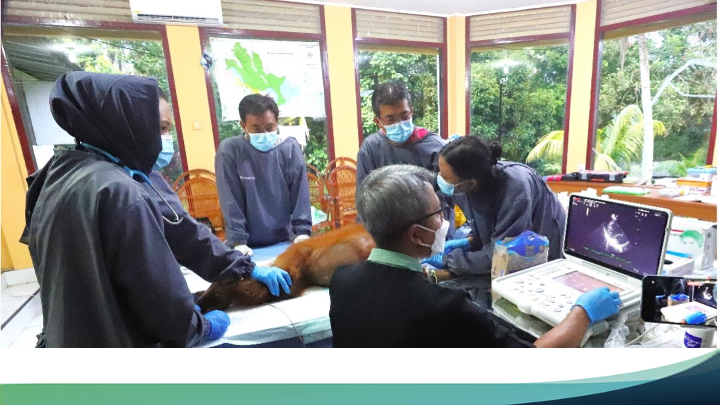
The critically endangered Sumatran orangutan is vital to rainforest ecosystems, yet it faces extinction due to habitat destruction and illegal trafficking. The Frankfurt Zoological Society (FZS) is working to reverse this decline through a reintroduction and medical intervention programme. Orangutans such as Sudin and Haga are examples of their success. Rescued from smugglers, Sudin recovered from pneumonia and parasites under the care of FZS veterinarians. Haga, a young male who sustained fractures in a dominance clash, underwent surgery and is now recovering. Their recoveries will contribute to the broader ecological restoration taking place in Bukit Tigapuluh, where orangutans act as flagship species. They will soon return to ‘jungle school’ to learn more survival skills.
As seed dispersers, orangutans regenerate forests, sustain biodiversity and thus help to mitigate climate change. FZS’s holistic approach of post-operative care, survival training and habitat protection empowers the orangutans to reclaim their role as ecosystem engineers. Each successful rehabilitation strengthens food chains and increases forest resilience.
On International Day for Biological Diversity, FZS’s work highlights that conservation requires active involvement, including rescuing, rehabilitating and reintroducing wildlife. Protecting orangutans is not just an act of charity, but an investment in the health of our planet. By restoring these primates, FZS fosters balanced ecosystems and a future in which humans can coexist with nature in harmony. Their approach demonstrates that saving species is essential for the long-term health of our planet — a mission that requires urgency, compassion and science-based action.